Used Chevrolet Blazer EV PPV Offers 498 HP for Under $30,000
The Blazer EV PPV pairs 498 hp with a tested 5.14-second sprint to 60 mph. Used examples can cost less than $30,000, though supply is scarce.
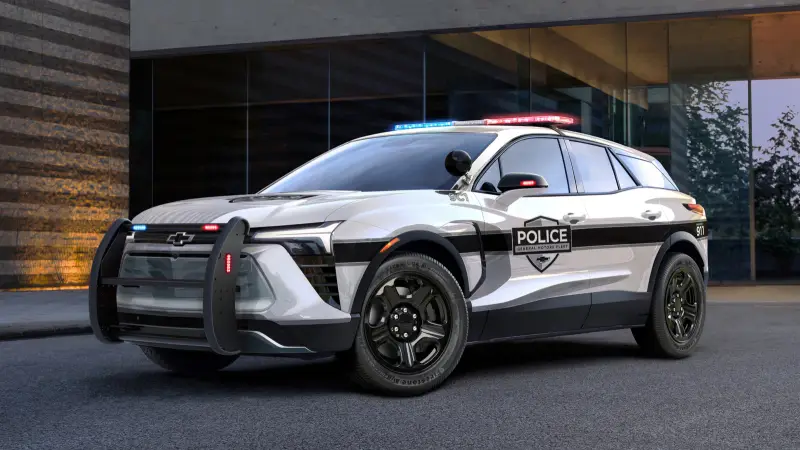
The Chevrolet Blazer EV Police Pursuit Vehicle puts 498 horsepower and a 130-mph tested top speed in a package that has begun appearing on the used market for less than $30,000. That makes it an unusual performance buy: its power output is closer to expensive new performance cars than to the affordable sedans and EVs named in the same comparison. The catch is availability. Only five examples were listed nationwide on Carfax when the figures here were reported, with prices ranging from $29,405 to $35,995.
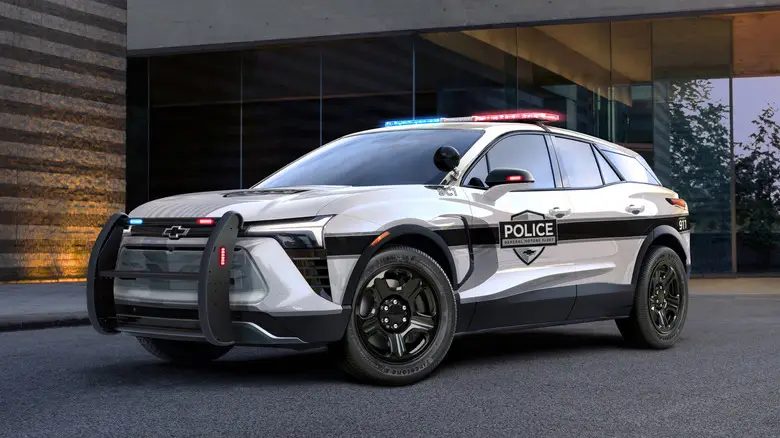
The PPV finished second in this year's Michigan State Police vehicle testing, behind the Mustang Mach-E GT eAWD. Its two electric motors produce 498 hp and 571 lb-ft of torque, and testing recorded a 0-to-60-mph time of 5.14 seconds. Those figures make it a quick crossover by any measure, even though its output is lower than that of the retail Blazer EV SS on which it is based.
That price-to-power contrast is striking. A new Dodge Charger Scat Pack is listed at $56,990 with destination and produces 550 hp, while a Tesla Model 3 Performance is listed at $56,630 with 528 hp. At the other end of the new-car price range, the Honda Accord base model has 192 hp and the Nissan Leaf has 214 hp. Those comparisons don't make the used PPV equivalent to any of those cars: body style, age, equipment, condition and intended use all differ. They do show why the Blazer attracts attention from shoppers looking for substantial output without a new-car price above $50,000.
What changes in the police version
Chevrolet bases the EV PPV on the high-performance Blazer EV SS, but the fleet model's powertrain is tuned to a lower output. The retail SS produces 615 hp and 650 lb-ft of torque; the PPV is limited to 498 hp and 571 lb-ft. That leaves a 117-hp gap between the two, while the PPV still has enough performance to reach 60 mph in just over five seconds in the Michigan testing.
Price separates them just as clearly. Chevrolet lists the 2027 Blazer EV SS with all-wheel drive at $62,495 after destination. The least expensive new Blazer EV is listed at $46,795 after destination. Against those figures, a used PPV under $30,000 can look like a shortcut to high output, but the market is small and the available listings cited here extend above that price. A buyer may need to weigh the specific vehicle and its asking price rather than expect to find a broad selection at the lowest figure.
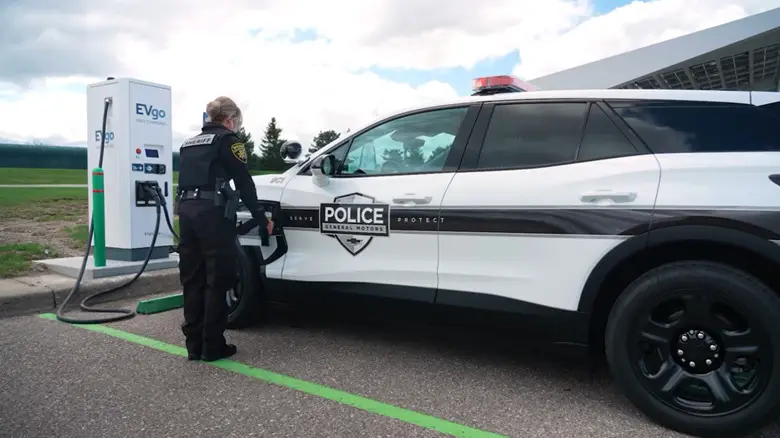
The PPV also brings hardware and electrical systems designed for fleet work. Its purpose-built electrical architecture includes a 400-to-12-volt power module reducer and a universal vehicle module, supporting additional equipment and operating modes such as Shutdown Inhibit and Fast Idle. The chassis equipment includes front Brembo brakes, heavy-duty suspension and steel skid plates. These additions distinguish the fleet model from a standard retail Blazer EV and may matter to buyers considering one for its performance and utility.
Used examples may still have bull bars fitted, but the red and blue flashing lights are not included. Equipment can vary from one vehicle to another, so the listing and the vehicle itself matter: buyers should check what remains installed and how the vehicle has been configured. The fleet-specific electrical components and operating modes are also part of the PPV's identity, rather than a simple power upgrade to a regular Blazer.
The ownership trade-off
For a shopper, the appeal is easy to understand: a quick, all-wheel-drive electric crossover with nearly 500 hp at a price that can fall below $30,000. The less convenient part is shopping in a thin used market. Five nationwide listings in the cited Carfax snapshot offer little choice by trim, mileage, condition or location, and the reported price range tops out at $35,995. The under-$30,000 examples on CarGurus suggest lower-priced listings exist, but they don't establish how many are available at any given time.
The supplied figures don't include battery range, charging speed, energy consumption, battery condition or maintenance history for the used vehicles. Those details are central to judging an EV for daily use, and they can't be inferred from horsepower or acceleration testing. A low asking price may make the PPV worth investigating, but performance alone won't tell a buyer how well a particular example fits regular driving.
The Blazer EV PPV's strongest case is therefore specific: it combines fleet-grade hardware and tested performance with used prices that can undercut new cars offering similar power. Its limited supply and missing ownership details call for a vehicle-by-vehicle assessment. For drivers willing to search carefully, it offers a rare route to a very quick electric crossover without paying new Blazer SS money.