9 Lower-Cost Alternatives to the Toyota Land Cruiser, Compared
From the 4Runner to the Bronco Sport, these nine SUVs and a pickup trade varying amounts of Land Cruiser capability for lower prices.
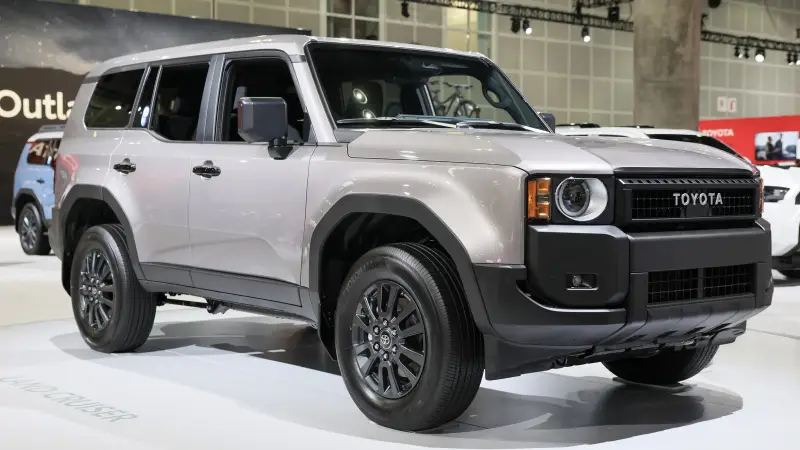
The Toyota Land Cruiser still pairs serious off-road equipment with family-friendly space, but its $59,775 starting price leaves room for buyers to choose a different balance of capability, comfort and cost. The nine alternatives below range from $33,690 to $55,085, with options built for rocky trails, everyday family use or work duties.
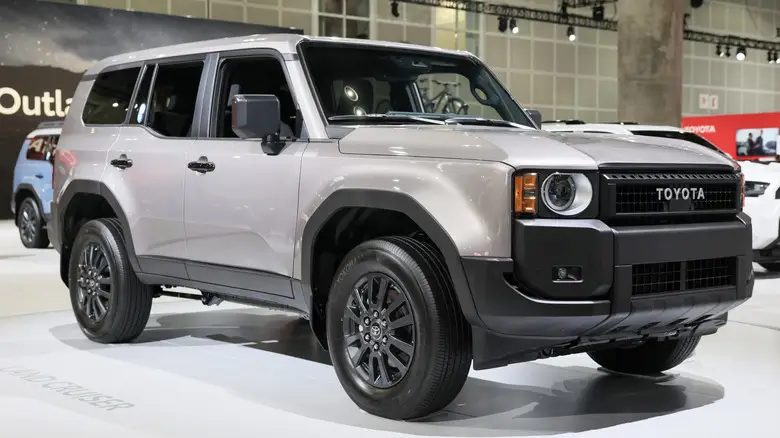
The current U.S. Land Cruiser is the smaller 250 series, based on the Prado sold in other markets. Its $59,775 starting price for the 1958 trim, including fees, is well below the 200 series’ starting price of more than $87,000 in 2021. The 2027 model uses Toyota’s hybrid 2.4-liter turbocharged i-Force Max powertrain, rated at 326 horsepower and 465 pound-feet of torque. Full-time four-wheel drive, a two-speed transfer case and crawl control give it equipment suited to difficult terrain as well as family trips.
Each alternative here costs less than the Land Cruiser, though the savings come with trade-offs. Some keep body-on-frame construction and dedicated off-road hardware; others use unibody platforms and all-wheel drive, which can suit moderate trails and everyday driving. Prices below include handling and destination fees as stated.
Toyota 4Runner TRD Off-Road i-Force Max: $55,085
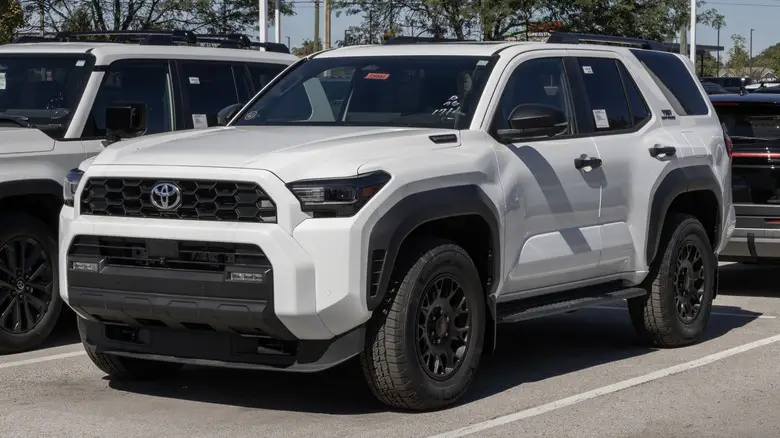
The closest match to the Land Cruiser is also the most expensive alternative here. The 4Runner TRD Off-Road i-Force Max shares its hybrid powertrain, body-on-frame TNGA-F platform, two-speed transfer case and crawl control. Its 9.1 inches of ground clearance tops the Land Cruiser’s 8.1 inches, so their off-road capability looks closely matched on paper.
The Land Cruiser makes a stronger case for passengers and luggage. It offers more head, shoulder, hip and leg room, along with 46.2 cubic feet of cargo space behind the second row; the 4Runner has 42.6 cubic feet. The 4Runner counters with a power rear window across the model range. For buyers who can manage with its tighter cabin, it brings much of the Land Cruiser’s mechanical recipe for several thousand dollars less.
A more affordable route is the 2026 4Runner SR5 with the $2,000 part-time four-wheel-drive option, priced at $45,865. That version gives up the i-Force Max engine, two-speed transfer case and some of the higher trim’s equipment, but it leaves a much larger gap below the Land Cruiser’s price.
Jeep Wrangler Rubicon four-door: $53,325
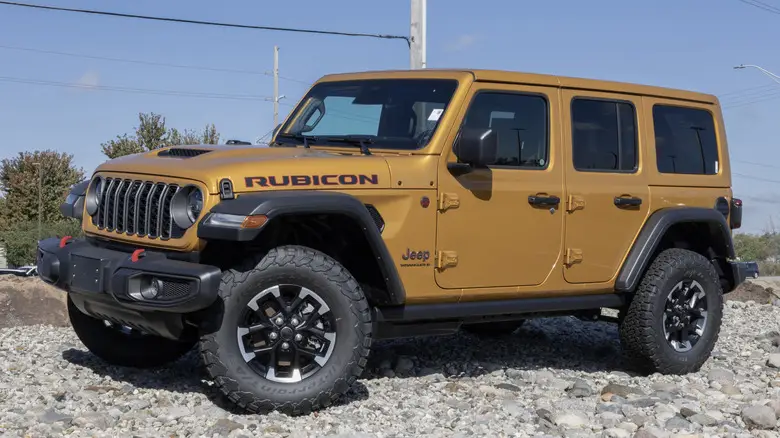
The Wrangler Rubicon is the pick for buyers who put trail hardware and open-air driving ahead of on-road polish. Its removable doors and roof give it a distinctive kind of versatility, while a four-door 2027 model starts $6,450 below the Land Cruiser.
Rubicon equipment includes front and rear electronic locking differentials, rock rails, skid plates, a front sway-bar disconnect, Dana 44 solid axles and 33-inch all-terrain tires. The 3.6-liter V6 produces 285 horsepower, less than the Toyota hybrid, and comes with a six-speed manual transmission as standard. That manual option will appeal to drivers who want more involvement, though it’s a different fit for those prioritizing easy commuting.
Towing is a clear limitation: the Wrangler is rated for 3,500 pounds, compared with 6,000 for the Land Cruiser. The Rubicon suits buyers who’ll use its dedicated off-road equipment and value the removable top and doors. Families who tow heavier loads or want a quieter, more refined daily drive may find the Toyota’s extra capability and comfort easier to justify.
Honda Passport TrailSport: $51,590
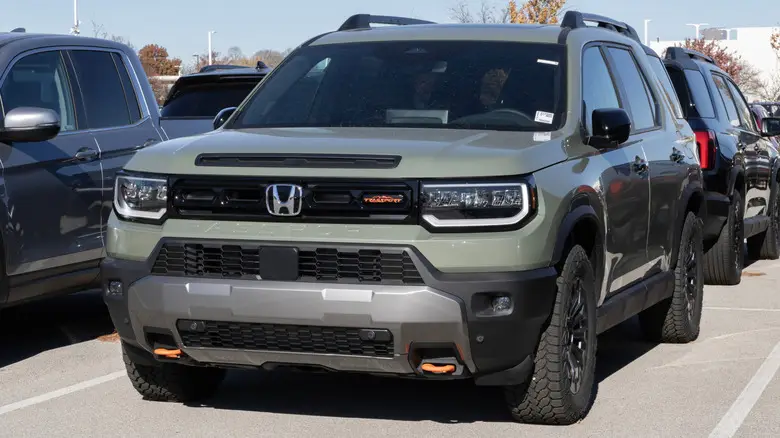
The Passport TrailSport makes the case that a useful adventure vehicle doesn’t need body-on-frame construction or a low-range transfer case. At $51,590, it pairs torque-vectoring all-wheel drive with 9.6 inches of ground clearance and 31-inch tires. It’s less suited to the most demanding terrain than the Land Cruiser, but the source describes it as capable well beyond the places most owners are likely to take it.
Compared with the base Passport RTL, the TrailSport costs $4,800 more. In return, it adds all-terrain tires, off-road suspension, Honda’s TrailWatch camera system, recovery hooks and skid plates. Its 3.5-liter V6 delivers 285 horsepower and 262 pound-feet of torque. Towing capacity is 5,000 pounds, one thousand short of the Land Cruiser.
The key question is how much low-range hardware a buyer will use. If serious off-roading isn’t part of the plan, the Passport’s family focus and lower price could make more sense. Buyers who don’t need the TrailSport upgrades can also consider the 2027 Passport RTL at $46,790.
Jeep Grand Cherokee Limited: $48,315
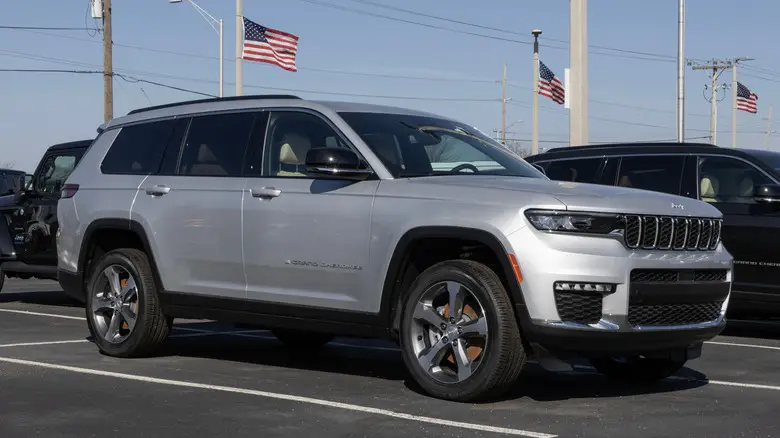
The two-row Grand Cherokee Limited leans toward comfort and road manners while retaining some ability to handle trails. Its $48,315 starting price is more than $10,000 below the Land Cruiser’s, and its interior dimensions are broadly similar. The Jeep offers more rear legroom in some comparisons, while the Toyota has an advantage in overall interior space and cargo volume.
A turbocharged 2.0-liter Hurricane four-cylinder produces 324 horsepower and 332 pound-feet of torque. That’s less torque than the Toyota, but the Grand Cherokee is rated to tow 6,200 pounds, 200 pounds more than the Land Cruiser.
The trade-off shows up when terrain gets challenging. The unibody Jeep lacks the Toyota’s two-speed transfer case and locking differentials, so it’s better suited to less demanding off-road use. Buyers who value a comfortable SUV and occasional trail access may find the price difference compelling; those expecting frequent, technical off-roading have a stronger reason to choose the Land Cruiser.
Nissan Pathfinder Rock Creek: $46,665
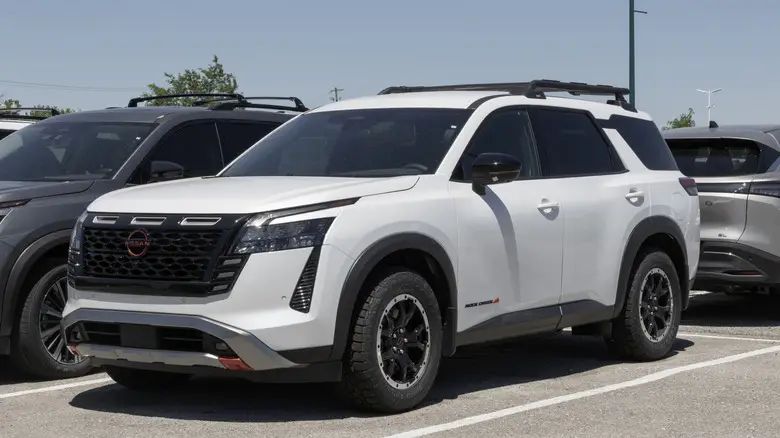
The Pathfinder Rock Creek offers three-row seating, a practical advantage the two-row Land Cruiser can’t match. Nissan moved the Pathfinder away from its body-on-frame origins decades ago, and the current model emphasizes ride comfort. The Rock Creek trim adds some trail-focused equipment while keeping that family-oriented layout.
A 2026 Rock Creek costs $46,665. It sits 0.63 inches higher than other Pathfinder trims, with wider all-terrain tires and hill descent control. Its 3.5-liter V6 is tuned for 295 horsepower and 270 pound-feet of torque, versus 284 horsepower and 259 pound-feet in other Pathfinder versions.
Buyers who need fewer off-road upgrades can look at the Pathfinder SV, which starts $3,100 lower, includes four-wheel drive and uses regular gasoline. It also returns 26 mpg combined, compared with 23 mpg for the Rock Creek, which requires premium fuel. For households that need a third row and want moderate trail capability, the Pathfinder’s lower price and seating flexibility are strong reasons to consider it.
Subaru Outback Wilderness: $45,490
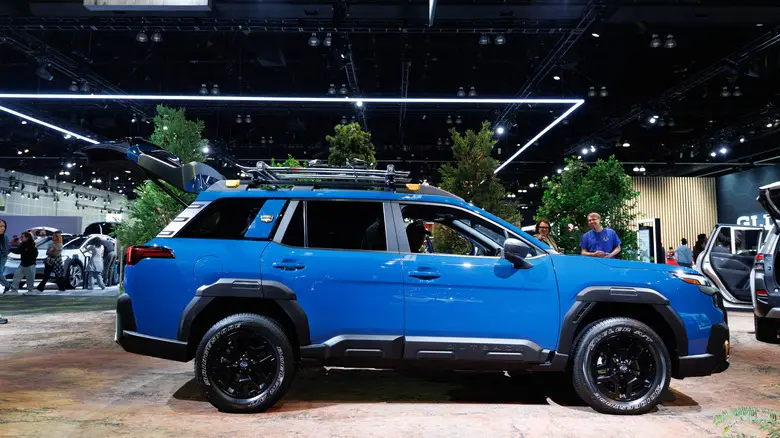
The Outback Wilderness brings all-wheel drive and extra ground clearance in a wagon-shaped package, at a price about 25% below the Land Cruiser. Subaru’s standard Outback starts at $34,490 and uses a 2.5-liter boxer four-cylinder rated at 180 horsepower and 178 pound-feet of torque. The Wilderness steps up to a 260-horsepower turbocharged 2.4-liter boxer engine.
Its raised, four-wheel independent suspension includes electronically controlled dampers, and ground clearance is 9.5 inches, more than the Land Cruiser’s 8.3 inches as stated for this comparison. Underbody protection, all-terrain tires and high-clearance front and rear bumpers add trail-oriented equipment. The Wilderness is rated to tow 3,500 pounds, 800 pounds more than the base Outback.
Optional packages can add comfort features while keeping the price below the Toyota’s. The $2,090 OP22 package includes a 12.1-inch touchscreen, a 360-degree surround-view system and a power moonroof. The $4,090 OP23 package also adds Nappa leather, ventilated front seats and power-folding exterior mirrors. The Outback won’t match the Land Cruiser on the most difficult terrain, but it offers useful clearance and everyday versatility at a lower cost.
Ford Bronco four-door: $43,290
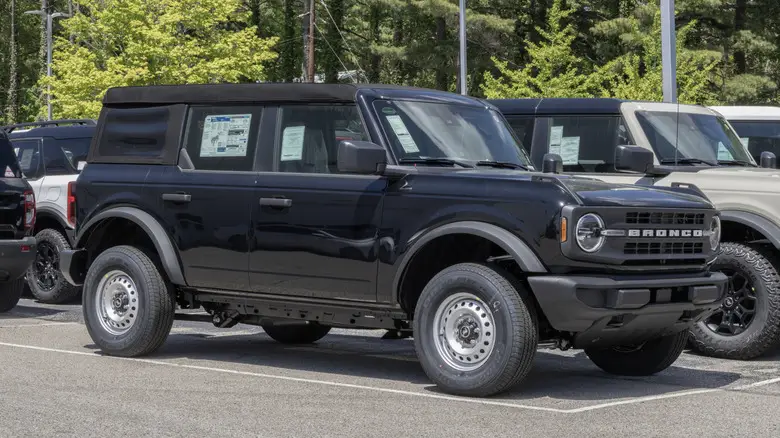
The Bronco’s combination of body-on-frame construction and removable roof and doors gives it a more rugged, open-air character than the Land Cruiser. A four-door model starts at $43,290, leaving $16,485 between it and the Toyota.
The base model uses a 300-horsepower, 325-pound-foot 2.3-liter EcoBoost turbocharged inline-four. A seven-speed manual transmission is standard; a 10-speed automatic costs $1,795. For buyers seeking more trail equipment, the $50,885 Badlands trim adds electronic locking differentials, a disconnecting front stabilizer bar and Bilstein position-sensitive dampers.
The Bronco’s towing rating is 3,500 pounds, well below the Land Cruiser’s 6,000. Still, the lower entry price and open-air design make it a compelling choice for drivers who want off-road ability and don’t need the Toyota’s greater towing capacity or more polished feel.
Chevrolet Colorado WT 4WD: $37,795
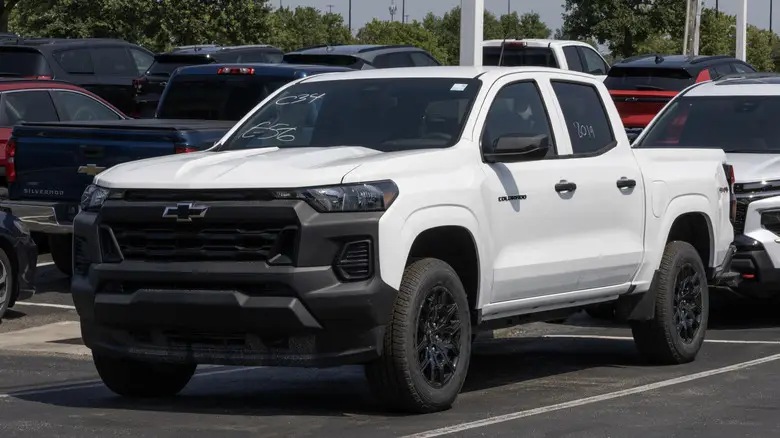
A pickup may seem an unconventional substitute for a family SUV, but the Colorado WT 4WD offers a useful mix of body-on-frame construction, five-seat cabin space and work-ready cargo capacity. Its five-foot bed is the main distinction: it can carry equipment or messy loads that don’t belong inside an SUV.
The turbocharged 2.7-liter TurboMax inline-four produces 310 horsepower and 430 pound-feet of torque, close to the Land Cruiser’s output. The truck’s interior dimensions are also described as close to the Toyota’s, despite the Colorado being about two feet longer overall. Its 7.9 inches of ground clearance is slightly lower than the Land Cruiser’s.
Add the $945 Advanced Trailering Package and towing capacity rises to 7,700 pounds, well above the Toyota’s rating. A $1,295 hard folding, lockable tonneau cover can protect cargo in the bed. The pickup’s open storage won’t replicate an SUV’s enclosed luggage space, but for buyers who need one vehicle for family transport and work, the Colorado brings a lot of utility for much less money.
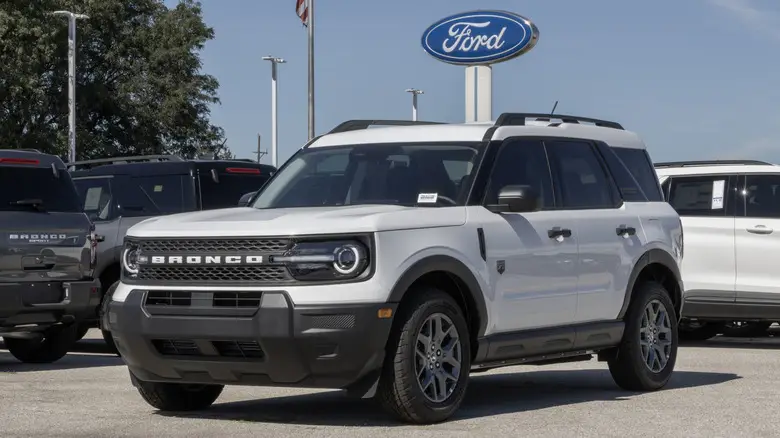
Ford Bronco Sport Big Bend: $33,690

At $33,690, the Bronco Sport Big Bend is the least expensive choice here. It costs little more than half as much as the Land Cruiser, making it a strong option for buyers who want a practical SUV with some off-road equipment but don’t need a full-size body-on-frame vehicle.
The Big Bend is a unibody SUV with HOSS off-road suspension and a four-wheel-drive setup. Its turbocharged 1.5-liter EcoBoost three-cylinder makes 180 horsepower and 200 pound-feet of torque. Towing is limited to 2,200 pounds, and its power and maximum cargo capacity fall short of the Land Cruiser’s.
Cabin space is more competitive than the price suggests. The Bronco Sport’s boxy shape provides more front and rear headroom than the Land Cruiser 1958 when it’s not fitted with a moonroof, while front and rear legroom are nearly identical. The Toyota has at least 16.9 cubic feet more maximum cargo capacity. For light towing and larger loads, that extra capacity matters; for moderate trails and everyday use, the Big Bend can cover the essentials at a markedly lower price.
These alternatives aren’t interchangeable. The 4Runner stays closest to the Land Cruiser’s hardware, the Wrangler and Bronco emphasize trail capability and open-air driving, and the Passport, Grand Cherokee, Pathfinder and Outback favor family usability with varying degrees of off-road equipment. The Colorado adds a truck bed, while the Bronco Sport makes the lowest-cost case. The right choice depends on which Land Cruiser strengths a buyer actually needs.