My Case to Succeed Mary Barra as General Motors CEO
A former GM agency executive makes a tongue-in-cheek pitch to lead the automaker, drawing on Renaissance Center experience and a long list of brand opinions.

General Motors could use a steady hand when Mary Barra eventually leaves the chief executive job. My candidacy offers continuity of a very specific kind: I’m a brunette woman from southeast Michigan with a square jaw, a flat Midwestern accent and firsthand experience inside GM. I also have opinions about which brands deserve another chance.

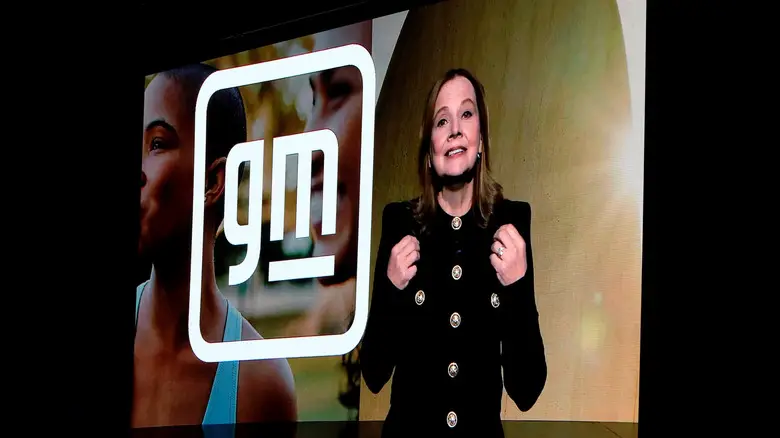
Barra took the role in 2014, after GM’s ignition switch crisis, and became the first woman to lead a major automaker. She has since been one of the company’s longest-serving chief executives. My pitch is that a succession plan needn’t mean upheaval at the top. GM could keep the reassuring Midwestern manner and add someone who already knows the company’s corridors, brands and habits. That someone, for the record, is me.
Barra’s record sets a high bar. She arrived as the automaker faced a serious crisis, then made changes that challenged complacency and helped steady the company. Those are substantial shoes to fill. Still, I’ve spent time in GM’s world, and I know what it takes to keep moving when the organization gets complicated.
Experience from inside GM
When Barra took over, I had just left my cubicle at the Renaissance Center and returned to journalism after three years working for GM through a creative agency. I led a redesign of GM.com and worked with five of the company’s brands to bring customers back. At the time, GM had grouped Pontiac, Oldsmobile, Saturn and Hummer under the acronym POSH. It was an unusual arrangement, but it gave me an unusually close look at how the company presented its brands.
That work taught me how a large automaker thinks about its customers and how it tries to speak to them. It also supplied practical leadership training of a less polished sort. A Chevrolet advertising executive once yelled at me about font size from outside a restroom stall. I managed to resist retaliating in a way that would violate the employee manual. That counts as restraint under pressure.
I can also navigate the Renaissance Center without starving or losing my mind, and I know the best coffee is on the Cadillac floors. Neither skill appears in a standard chief executive résumé, but both matter when you’re going to spend serious time at headquarters. So does knowing how to laugh at the brands. I’m comfortable doing that, and I’d keep calling Chevrolet “Chevy.”
A product plan with room for old names
My leadership agenda starts with the products GM has walked away from. I’d bring back the electric cars that were dropped, and I’d give Pontiac and Saturn another shot. Reviving retired brands would take more than affection for old nameplates; it would mean making a clear case for what each one contributes to the lineup. But GM already knows how to build identities around distinct brands. My experience working across several of them gives me a place to start.
I’d also take a hard look at the company’s brand count and organization, with an eye to cutting unnecessary bulk. Chevrolet can lose some of its excess, and Buick could use a serious review. These are deliberately blunt priorities. A chief executive shouldn’t confuse loyalty to a badge with a reason to keep every part of a business as it stands.
My geographic preference is just as clear: I want a stronger manufacturing presence in Detroit. I’m not eager to drive outside the city, which makes local production an appealing fit. The broader point is that decisions about where GM builds vehicles shape its relationship with the places that have supported the company. Detroit should have a meaningful role in that future.
Trust is part of the job
My qualifications include more than brand strategy and a working knowledge of the company’s layout. I owned one of the Saturns affected by the ignition switch defect and survived the experience. That gives me a personal stake in how GM handles customer trust when a product falls short. I also know the corporate lawyers, which could make some difficult conversations more efficient.
Customers need confidence that the company will treat their information with care. I wouldn’t sell their data. Employees, meanwhile, deserve a leader who can confront poor decisions without turning every disagreement into a spectacle. I have a formidable “I’m not mad, I’m disappointed” speech. The Jalopnik staff can confirm that it communicates both feelings at once.
Barra’s tenure has shown how much the job asks of its occupant: managing a historic automaker through a serious crisis, making changes inside the business and keeping a vast collection of brands and products pointed in the same direction. My combination of GM experience, local loyalties and low tolerance for unnecessary complexity makes a compelling case. General Motors has my number. It can call when the next chapter needs a leader who knows the building, the brands and the coffee.