Seven 6.2-Liter V8s Ranked by Power, From Ford’s 444-HP Boss to Dodge’s 1,250-HP Demon 170
From Ford’s naturally aspirated Raptor V8 to Dodge’s E85-fueled Demon 170, these 6.2-liter engines span 444 to 1,250 horsepower.
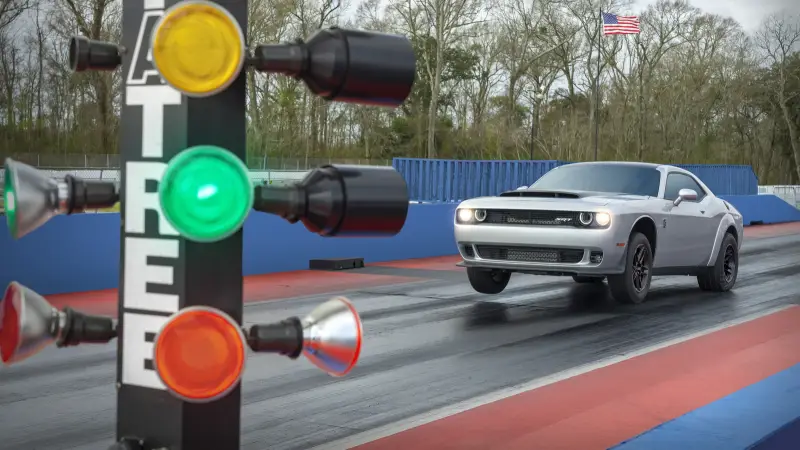
A 6.2-liter badge covers a striking range of output. The seven V8s here run from 444 horsepower in Ford’s F-150 Raptor to a claimed 1,250 horsepower in the Dodge Challenger SRT Demon 170 on E85. Between them are naturally aspirated Mercedes-AMG engines, two supercharged Corvette motors and a pair of increasingly specialized Dodge Hemi V8s.
Displacement labels aren’t perfectly consistent: automakers measure engines in cubic centimeters and round when describing them in liters. Dodge’s Hemi, for example, displaces about 6,166 cc. Mercedes-AMG calls its related engines 6.3-liter units, although their displacement is closer to 6.2 liters. The ranking below follows the horsepower figures given for each application.
Ford’s Raptor Boss starts at 444 hp
The 6.2-liter Ford V8 known as “the Boss” began as an optional engine in the F-150 SVT Raptor when that truck reached dealerships in 2010. It produced 400 hp at first. Ford made it standard the following year, when output rose to 411 hp; the version ranked here is rated at 444 hp.
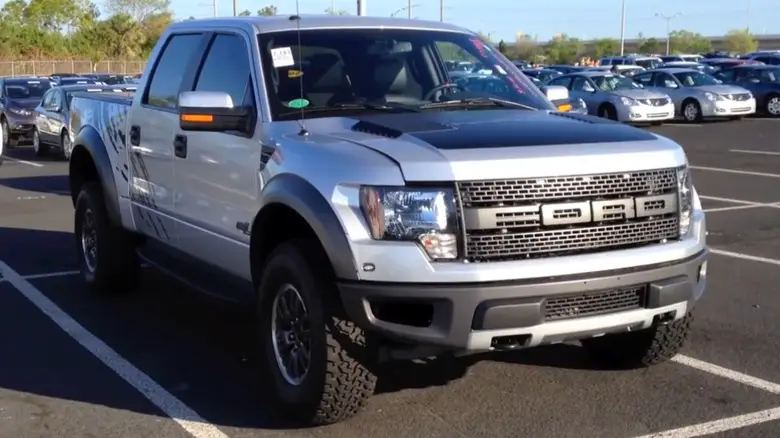
The Boss name can cause confusion: this truck engine wasn’t related to the V8s used in Boss Mustangs. Its Raptor setting also made the engine’s character different from that of the performance cars higher on this list. Ford quoted a zero-to-60-mph time of 6.6 seconds for the Raptor.
Ford’s early development target was far more ambitious: a so-called “Triple Seven,” a 7.0-liter V8 intended to make 700 hp and rev to 7,000 rpm. Ford produced one example years later, and it ended up in a 2005 Mustang dragster that ran the quarter mile in under nine seconds. The Raptor never received that engine, leaving the production truck with the 6.2-liter Boss.
Mercedes-AMG’s M156 and M159: 525 and 622 hp
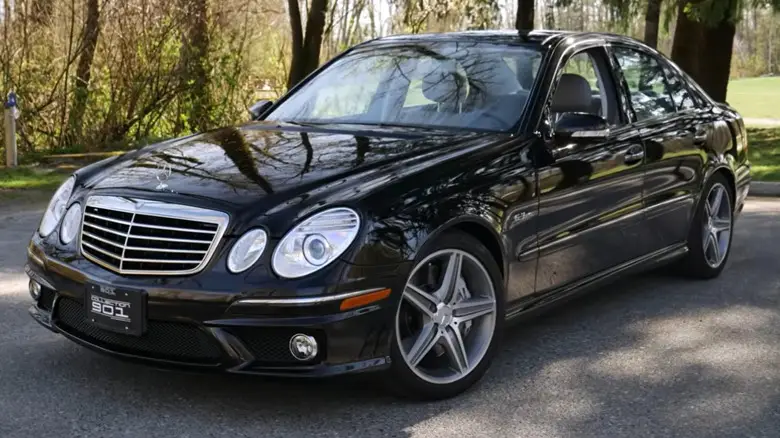
The naturally aspirated M156 marked a turning point for Mercedes-AMG: it was the performance division’s first engine developed from scratch. Earlier AMG models used modified Mercedes-Benz production engines, many assembled by hand. The M156 debuted in the 2007 E63, where it made 507 hp and 446 lb-ft of torque. Car and Driver recorded a 4.2-second run to 60 mph and a 12.6-second quarter mile at 115 mph. By 2010, the E63’s M156 was rated at 518 hp and 465 lb-ft.
The engine later powered several AMG models, including the R230 SL 63, CLK 63, CL 63, CLS 63 and ML 63. Despite the “63” badges, these cars used a 6.2-liter V8. The M156 entry in this ranking is rated at 525 hp.
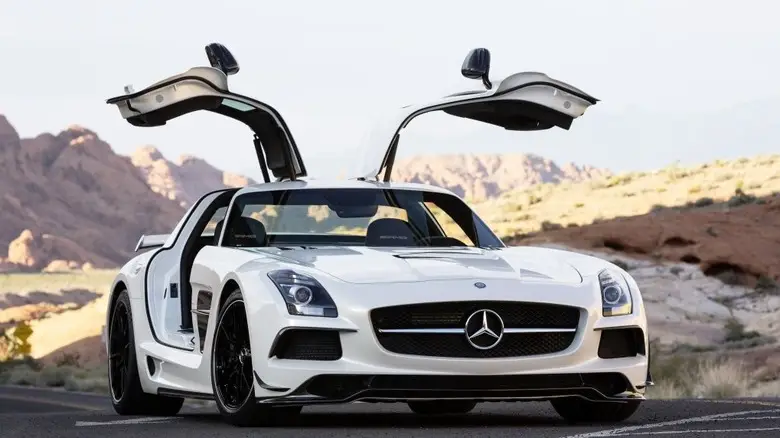
At 622 hp, the M159 was a more heavily reworked member of the family. It first appeared in 2010 with 563 hp; the SLS AMG GT offered 583 hp from 2013 to 2015. The 2020 Mercedes-AMG SLS Black Series reached 622 hp while retaining naturally aspirated induction—a different approach from the supercharged engines farther up the list.
Mercedes changed about 120 components compared with the M156, including the camshafts, and added dry-sump lubrication and lightweight forged pistons. The M159’s 6.3-liter marketing label followed Mercedes’ naming convention for the M156, a 6,208 cc engine. That number rounds to roughly 6.2 liters.
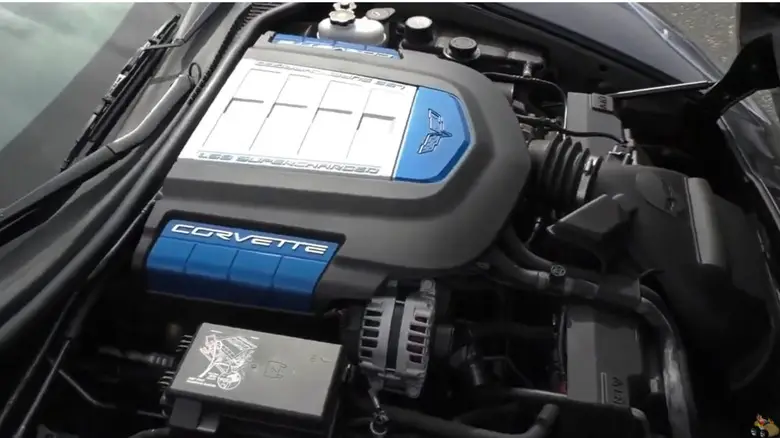
Corvette ZR1s push output to 638 and 755 hp
Chevrolet’s 2009 Corvette ZR1 used the supercharged LS9, rated at 638 hp. It was the most powerful production engine Chevrolet had offered when it debuted. The car’s performance matched that headline figure: zero to 60 mph took 3.4 seconds, and top speed was 205 mph.
The LS9 belongs to GM’s LS engine family, distinct from the later LT series. The LS9 used port fuel injection; LT engines added direct injection, cylinder deactivation and variable valve timing. The two families also have little parts interchangeability, a practical distinction for anyone comparing their engineering.
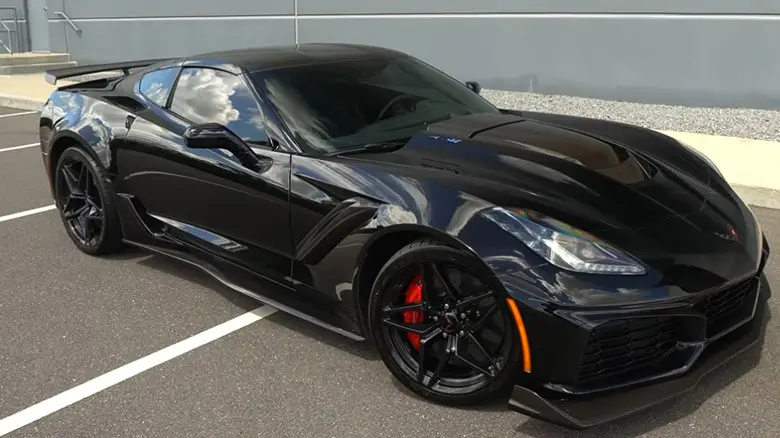
A decade later, the 2019 Corvette ZR1 brought a supercharged 6.2-liter LT5 rated at 755 hp and 715 lb-ft. It was the most powerful production Chevrolet to that point, and the front-engine Corvette’s closing act set performance marks of its own: Car and Driver measured zero to 60 mph in 2.9 seconds and a 10.7-second quarter mile at 135 mph.
This LT5 is not the same engine as the 5.7-liter V8 developed by Lotus for the 1990 Corvette ZR-1, despite sharing its code. The 2019 engine was hand-built and introduced GM’s first dual fuel-injection system, combining direct and port injection.
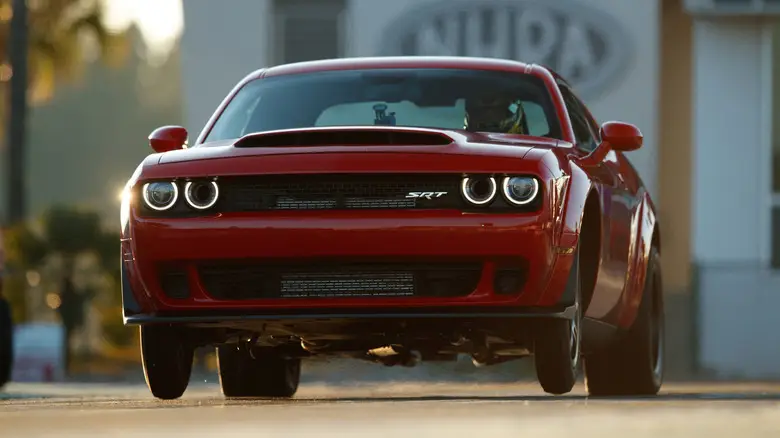
Dodge Demon reaches 840 hp, then the Demon 170 hits 1,250
The 2018 Challenger SRT Demon raised the supercharged 6.2-liter Hemi to 840 hp and was built with drag-strip performance in mind. Dodge described it as street legal, and it covered the quarter mile in 9.65 seconds at 140 mph—then a production-car record. Its predecessor, the standard Hellcat, made 707 hp.
Although the Demon and Hellcat engines were related, fewer than 40% of their components were shared. The Demon received a reinforced block with upgraded main caps and deck surfaces, along with a forged alloy crankshaft, forged pistons and powder-forged connecting rods. It was a substantial hardware change behind the increase in output.
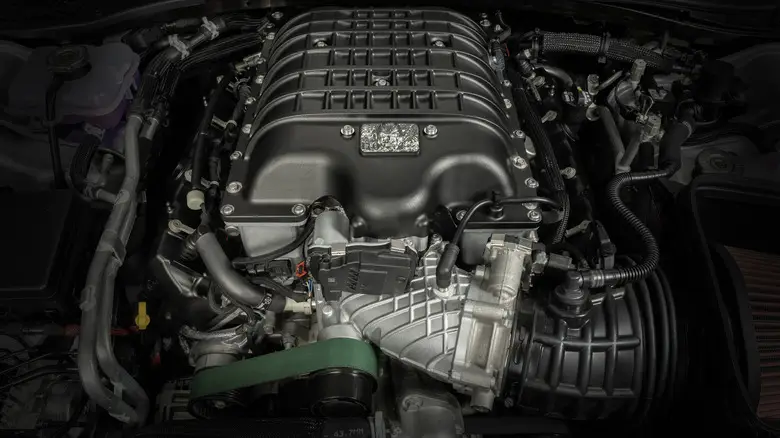
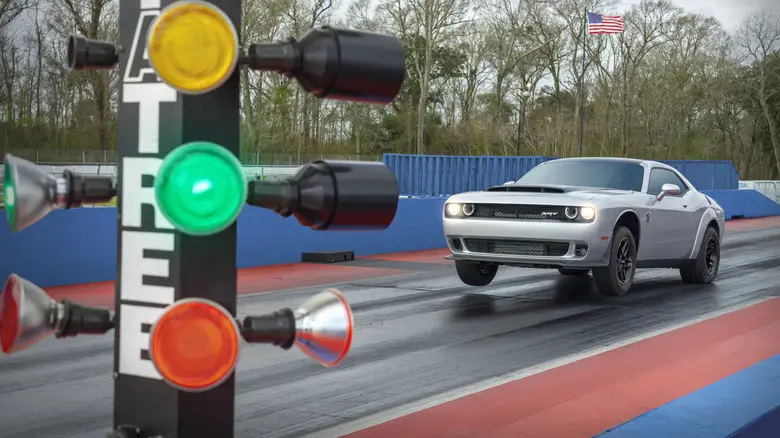
The 2023 Challenger SRT Demon 170 took the same displacement to a different extreme. Dodge rated it at 1,250 hp and 945 lb-ft on E85 ethanol fuel; on E10, it made 900 hp. Its engine shared the 6.2-liter size with earlier Hellcat and Demon versions, but Dodge changed nearly every internal component except the camshaft.
To support the higher output, the Demon 170 used fuel injectors capable of delivering more than 2.7 gallons per minute. Its 3.0-liter supercharger also received changes to the throttle body, pulley, intake valves, valve guides, bearings and connecting rods. On a race-prepped surface, Dodge quoted a 1.66-second zero-to-60-mph time.
The progression shows why displacement alone doesn’t tell the story. These engines range from a naturally aspirated pickup V8 to hand-built AMG units and supercharged drag-focused powerplants. Induction, fuel delivery and extensive internal changes turn a shared approximate size into outputs that differ by more than 800 horsepower.