1969 Chevrolet Camaro SS: $58,900 Restomod Pairs a 396 V8 With a Body-Up Restoration
This Ontario orange Camaro SS has a modified 396, a TH400 automatic and 10,000 miles shown. Its engine output and restoration details need scrutiny.
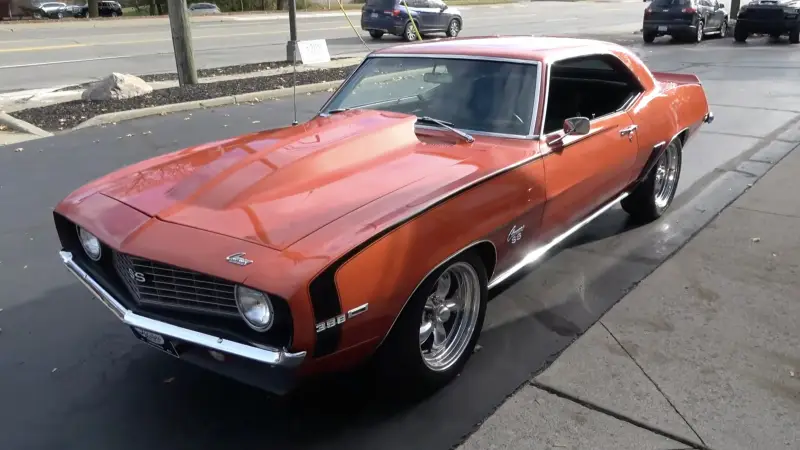
A 1969 Chevrolet Camaro SS with a 396-cubic-inch V8, an automatic transmission and a body-up restoration is listed for $58,900 by a dealer in Clarkston, Michigan. The Ontario orange metallic coupe shows 10,000 miles on its odometer. Its modified engine makes the car appealing as a street-focused classic, though the listing and walkaround provide no horsepower or torque figures. That leaves a key question for buyers: how much of the original big-block’s performance does this Camaro deliver today?
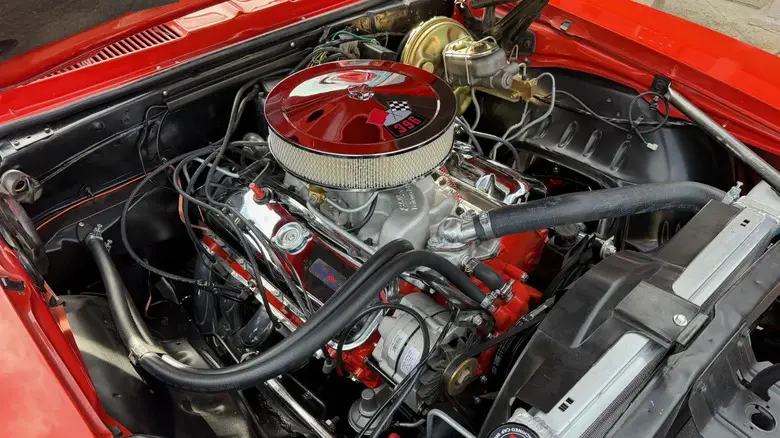
The engine has an Edelbrock Performer aluminum intake, ceramic headers, a mild camshaft and a Flame Thrower high-energy ignition distributor. Chrome valve covers and an air cleaner finish the visible engine-bay changes. These parts describe a modified setup, but they don’t establish its output. Without a dyno result or more detail about the engine’s internal components, it’s impossible to place this car confidently alongside the factory 396 versions.
Power goes through a Turbo-Hydramatic 400 automatic to a 10-bolt rear axle with 3.23 gears. That combination gives prospective buyers a clearer picture of the drivetrain than the engine’s missing output figures do. The transmission and axle ratio are listed, but there’s no information here about how the car shifts, how the engine runs under load, or whether those components have been rebuilt. A walkaround can show presentation; it can’t answer every mechanical question.
Factory figures set the comparison
Chevrolet offered the 1969 Camaro SS with three 396 engine ratings: 325, 350 and 375 horsepower. Their published torque figures ranged from 410 to 415 pound-feet, with the top-rated L78 reaching peak horsepower at 5,600 rpm. Those numbers provide useful historical context, but they aren’t a performance claim for this modified example. Its intake, headers and camshaft distinguish it from a factory-stock car, and no documentation in the listing ties it to a particular original 396 specification.
On paper, the L78 compared well with other period pony cars. Pontiac rated the Firebird Ram Air IV at 345 horsepower, while Ford’s Mustang Mach 1 428 Cobra Jet was rated at 335. Even the Camaro SS’s 325-horsepower 396 came within 10 horsepower of the Ford’s stated figure. Those ratings help explain the Camaro’s place in the muscle-car contest, but they don’t tell the full story of how quickly a particular car would cover a quarter-mile.
Period test results show why. In showroom-stock trim, a Camaro SS 396 L78 recorded by Car Life, as reported by Curbside Classic, reached 60 mph in 6.8 seconds and completed the quarter-mile in 14.77 seconds at 98.7 mph. The Mach 1 428 ran to 60 mph in 5.5 seconds and covered the quarter-mile in 13.9 seconds at 103.3 mph. A Plymouth ’Cuda 440 and a Boss 429 Mustang also posted quicker quarter-mile times than the Camaro in those tests, at 14.01 and 14.09 seconds respectively. The Boss took 7.1 seconds to reach 60 mph.
Those comparisons put a useful limit on what horsepower ratings can explain. Traction was a challenge for powerful cars running bias-ply tires, so a high published figure didn’t guarantee the quickest launch or quarter-mile. The test figures describe specific cars and conditions; they don’t predict how this modified Camaro would perform. For a buyer, an engine inspection and a drive would help fill in more of the picture than period ratings alone.
Street-focused changes and cabin details
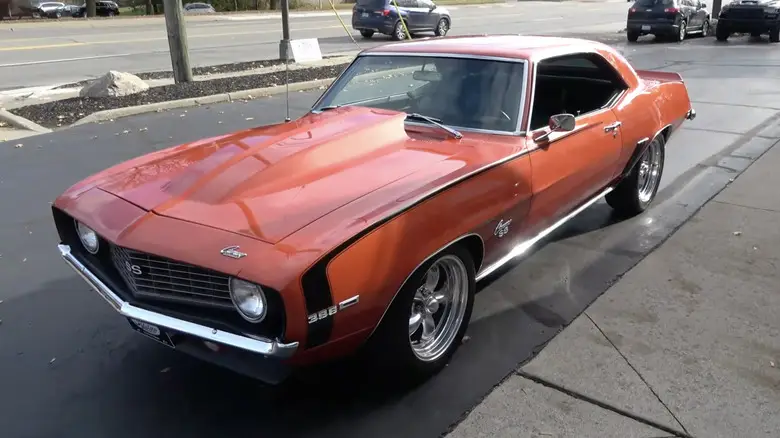
The exterior combines Ontario orange metallic paint with a black hockey stripe, front and rear spoilers, a cowl hood and dual chrome mirrors. Seventeen-inch American Racing Torque Thrust wheels carry Dunlop tires sized 235/40ZR17 at the front and 255/45ZR17 at the rear. The larger rear tires give the car a broader footprint at the back, while the wheel and tire package is a visible departure from a stock period setup.
Other listed changes include tubular upper and lower control arms, an aluminum radiator, power steering and power front disc brakes with slotted and drilled rotors. Together, those details suggest a build aimed at regular road use as well as display. The listing doesn’t provide a ride assessment, braking measurements or cooling results, so buyers would need to check the car’s condition directly. The mileage shown also doesn’t, by itself, establish the car’s full history or the distance covered since restoration.
The black vinyl cabin retains factory bucket seats and a center console, with a sport steering wheel and a Retrosound radio. That mix gives the interior a largely period-style layout with a modernized audio unit. The available details don’t specify the restoration date, the work performed on the body, or whether records accompany the car. Those gaps matter when weighing a restored classic: appearance, documented work and current mechanical condition each answer different questions.
At $58,900, this Camaro’s appeal rests on its presentation, 396 V8 and combination of classic styling with updated hardware. The 10,000 miles shown and body-up restoration are part of the pitch, while the engine’s actual output remains unreported. A close inspection, restoration documentation and a road test would clarify what the listing can’t: how the modified big-block behaves, and how well the rest of the car has held together.