Skoda Kodiaq Adds 200 kW Plug-In Hybrid and Laurin & Klement Trim
The Kodiaq’s new plug-in hybrid raises output to 200 kW and adds DC charging, while Laurin & Klement brings massage seats and distinctive trim.
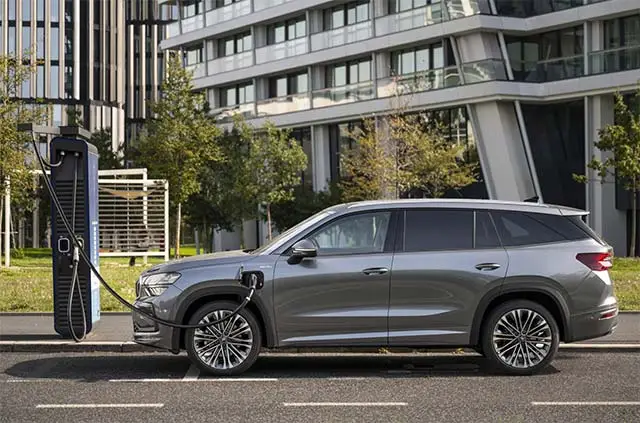
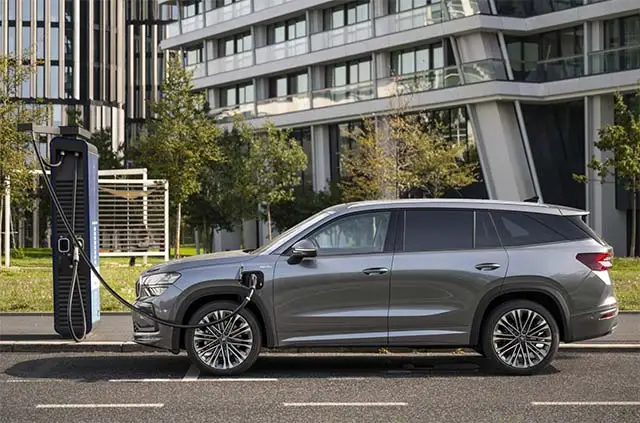
Skoda is widening the Kodiaq’s appeal in two distinct ways: a plug-in hybrid with 200 kW (272 PS) of combined output, and a new Laurin & Klement grade that becomes the range-topper. The powertrain adds DC fast charging at up to 50 kW, while the premium trim focuses on comfort and equipment. Together, the updates give buyers a stronger electrified option and a more lavish specification within the large SUV range.
A more powerful Kodiaq iV
The new plug-in hybrid lifts combined system output from 150 kW (204 PS) to 200 kW (272 PS). Its 1.5-litre TSI four-cylinder petrol engine produces 130 kW (177 PS), and the electric motor is rated at 85 kW (116 PS). Skoda attributes the increase to engine improvements and revised powertrain control software.
The traction battery retains the same stated capacity as the existing Kodiaq iV: 25.7 kWh gross and 19.7 kWh usable. The key change is therefore greater combined power, paired with a new charging option, rather than a larger battery.
DC charging at up to 50 kW gives drivers a way to add charge during longer trips. That can make a plug-in hybrid more flexible when a suitable fast charger is available, although charging time and the amount of energy added will depend on the stop. The announcement does not give a charging-time figure for this version.
Skoda has not stated an electric range for the 200 kW model. The current Kodiaq iV is rated for more than 100 kilometres of all-electric driving under its applicable test cycle, but that figure should not be assumed for the updated powertrain. Buyers comparing the two versions will need the new model’s final range and consumption figures to assess how its extra output affects day-to-day electric driving.
For now, the update’s clearest practical gains are stronger system output and the ability to use DC fast charging. The battery capacity remains unchanged, so drivers who can charge regularly may still find the plug-in format useful for shorter electric journeys, while the petrol engine supports longer travel.
Laurin & Klement adds comfort-focused equipment
The new Laurin & Klement grade sits at the top of the Kodiaq range and is available with a choice of powertrains. Its cabin includes seats with a massage function, a feature aimed at making longer drives more comfortable for the driver and passengers.
Exterior details include silver roof rails, body-coloured front and rear bumpers, matching side sills and specially designed alloy wheels. Laurin & Klement badges inside and outside identify the version. The package gives buyers a more distinctive and comfort-oriented choice without tying the trim to one particular engine configuration.
Pricing, market availability and the full equipment list have not been specified here. Those details will matter when comparing the new top grade with other Kodiaq versions, especially for buyers weighing its comfort features against the cost of moving up the range.
A decade of growth for Skoda’s large SUV
The Kodiaq made its world premiere in Berlin on September 1, 2016, with customer deliveries beginning in spring 2017. Skoda says 1.2 million customers across 70 markets have chosen the model since its debut. It was the brand’s first large SUV on the Volkswagen Group’s MQB platform and was offered from launch with five- or seven-seat layouts, petrol and diesel engines, and optional all-wheel drive.
The model’s history also includes a performance-focused branch. The Kodiaq RS arrived in 2018 as the first Skoda SUV to carry the RS badge, initially with a 2.0-litre BiTDI diesel producing 176 kW (239 PS). Later that year, racing driver Sabine Schmitz completed a Nürburgring Nordschleife lap in a production Kodiaq RS in 9 minutes and 29.84 seconds. Skoda says the time remains the record for seven-seat SUVs.
An April 2021 update added Matrix LED headlights and a 2.0-litre TSI petrol engine to the Kodiaq RS, raising its output to 180 kW (245 PS). Production of the first generation continued until 2024, reaching 866,100 vehicles. Around 60% were equipped with all-wheel drive, and five-seat models slightly outsold seven-seat versions. Germany, the United Kingdom and the Czech Republic were among the model’s key European markets.
The Kodiaq name draws on Kodiak Island in Alaska, with its final “q” influenced by the language of the Alutiiq people. Before deliveries began, the Alaskan city of Kodiak changed its name to Kodiaq for one day on May 6, 2016, in a celebration of the new SUV.
Second generation adds room and new controls
Skoda revealed the second-generation Kodiaq on October 4, 2023. Series production began at the Kvasiny plant in the Czech Republic in mid-January 2024. The new model builds on the original’s spacious family-SUV format with a roomier interior, revised styling and updated technology.
Among its cabin features are Smart Dials, multifunction rotary controls designed to make frequently used functions easier to operate. The second generation also introduced the Kodiaq iV, with 150 kW (204 PS) and an all-electric range of more than 100 kilometres under the applicable test cycle. Skoda reports that almost 330,000 second-generation Kodiaqs had been produced by the time of its latest announcement.
The new 200 kW plug-in hybrid extends that electrified offering, while Laurin & Klement adds a more comfort-led choice across the lineup. The next useful comparison will depend on the updated version’s confirmed electric range, consumption, pricing and market availability.