Karma Eximius 1 Pairs a 6.2-Liter V8 With Nearly 1,200 HP
Karma’s first Eximius commission is a four-seat, carbon-fiber plug-in hybrid targeting 2.7-second 0–60 mph acceleration and delivery in 2027.
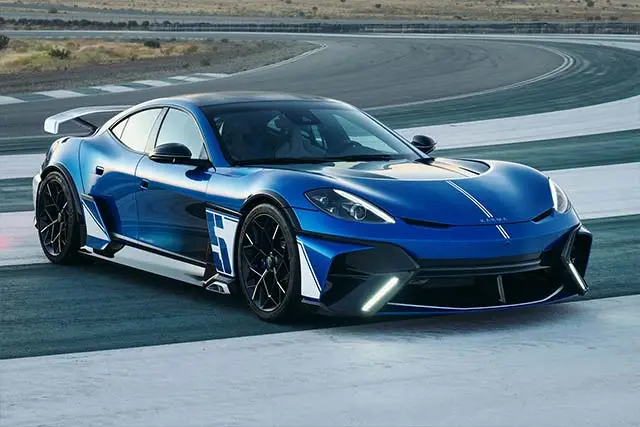
Karma Automotive’s Eximius 1 makes a case for a very different kind of electrified performance car: a four-seat, bespoke track machine with a 6.2-liter V8 and an estimated combined output of nearly 1,200 hp. It’s the first vehicle under Eximius, a program that lets clients work directly with Karma’s design and engineering teams on styling, performance and powertrain changes.
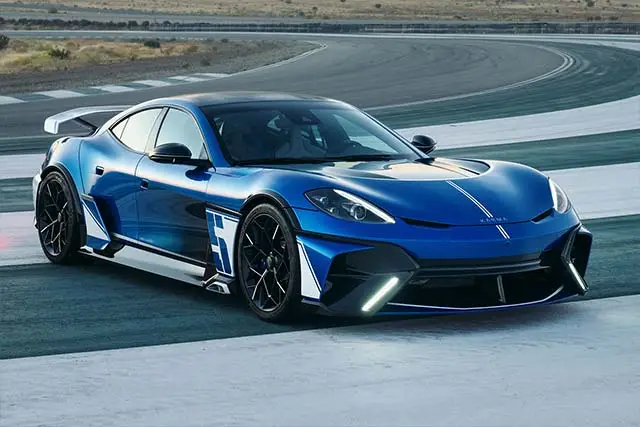
The car made its world debut at the 2026 Concours at Wynn Las Vegas on October 31. It remains under development with its commissioning client, and Karma expects to deliver it in 2027. The company hasn’t announced a price or final production specifications.
A wider, carbon-fiber take on the Gyesera
Eximius 1 starts with the design foundations of the Karma Gyesera, retaining its roofline, greenhouse, lighting elements and doors. Most of the remaining exterior has been redesigned, producing a wider and more muscular four-door shape. The body is finished in Borealis Blue, with exposed carbon fiber and white graphics.
The details point to a car intended for high-speed track use. A prominent carbon-fiber splitter and large side intakes reshape the front bumper; vents are added to the hood, and extended carbon-fiber wheel arches widen the stance. At the rear, a fixed GT wing and an elaborate diffuser are designed to help manage airflow and stability. Angular daytime running lights appear at both ends.
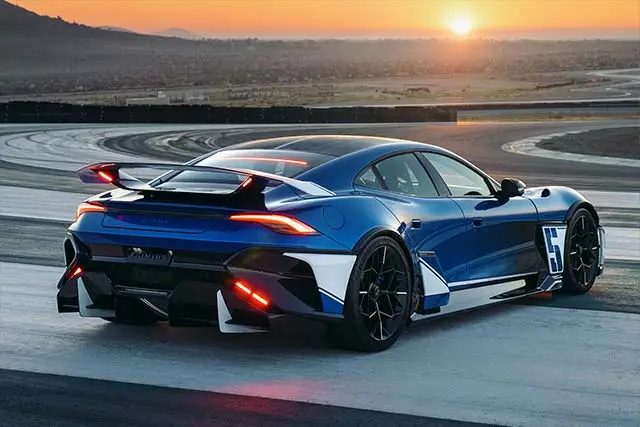
Karma says every exterior panel apart from the outer body surface is made from pre-impregnated carbon fiber. The car is 50 mm wider than the underlying design and rides on 21-inch magnesium wheels with center-locking hubs. Their reduced rotating and unsprung mass, along with the wider track and aerodynamic changes, supports the car’s performance brief.
Series-hybrid power and track hardware
The powertrain pairs a gasoline engine producing approximately 550 hp with a battery-powered electric drive system rated at 645 hp. Karma estimates combined output at nearly 1,200 hp. In this series-hybrid layout, the V8 generates electricity while electric motors propel the wheels.
Karma’s targets are 0–60 mph in 2.7 seconds and a top speed exceeding 200 mph. Those figures are estimates while development continues, so they remain targets rather than confirmed test results. The combination would put a four-seat car in supercar performance territory, though the source provides no electric range, battery capacity or charging figures to clarify its everyday plug-in use.
Hardware intended to manage the output includes carbon-ceramic brakes, two-piece slotted rotors and Öhlins semi-active suspension. The setup suggests the project reaches beyond visual customization: its performance components and powertrain are part of the commission’s engineering scope.
Four seats with a motorsport feel
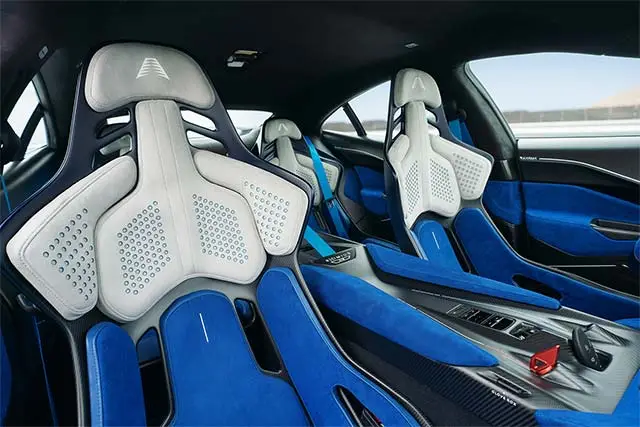
The cabin carries the exterior’s track focus into a four-seat layout. At the front are Recaro carbon-fiber bucket seats trimmed in blue Alcantara and Italian leather, with contrasting Moondust Alcantara sections. Carbon fiber also features across the doors, steering wheel, seats and center console. All four doors use exposed carbon fiber, with simplified armrests.
A flat-bottom steering wheel, billet-machined aluminum pedals, glossy carbon-fiber instrument panel and anodized billet-aluminum HVAC vents add to the motorsport character. The rear passengers are still part of the design: the center console extends into the rear compartment, where a custom-fitted carbon-fiber racing helmet belonging to the commissioning client is secured between the seats. An emergency kill switch further signals the car’s track-oriented purpose.
Nine commissions, with the next builds still unknown
Eximius is planned as a program for nine clients, each receiving an individually commissioned vehicle with unique styling and mechanical changes. Karma says clients can collaborate with its design and engineering teams on bodywork, performance characteristics and powertrain configuration. That scope goes beyond its Studio personalization program, which offers a more conventional route to tailoring a car.
The first commission began after a Karma Revero owner asked the company for something more extreme and unexpected than the standard vehicle. The client’s identity hasn’t been disclosed. Karma sees the program as room to explore designs and engineering choices that would be difficult to support in a conventional production model.
Eximius 1’s nearly 1,200-hp series hybrid is an unusual proposition as performance brands pursue electrification through different routes. Its V8 supplies electricity while electric motors deliver propulsion, joining plug-in hybrid technology with extensive carbon-fiber construction and four-seat practicality. Whether the other eight commissions will share this formula is still unknown. For buyers, the next useful details will be the finished car’s specifications, price and how its electric capability works in regular use.