Toyota Camry in India: Hybrid Efficiency, Executive Comfort and a Rs. 48.69 Lakh Starting Price
The Camry pairs 230 PS hybrid power with 25.49 kmpl certified efficiency, roomy rear seats and premium features at Rs. 48.69 lakh.
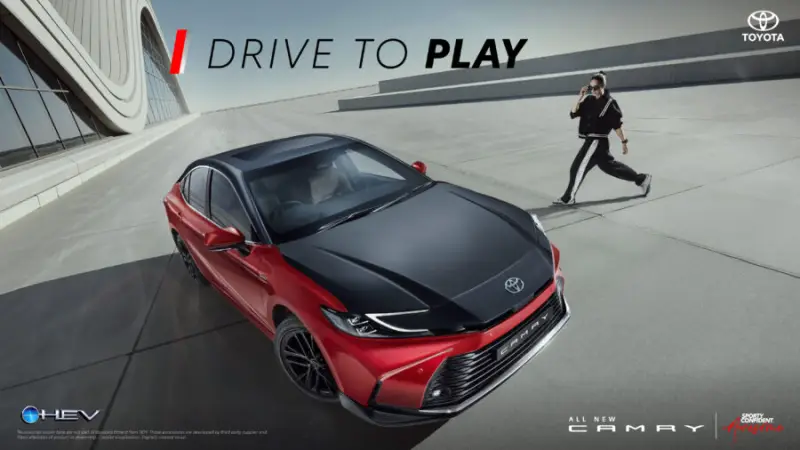
The Toyota Camry’s place in India’s premium range comes down to a particular mix: executive-sedan comfort, a strong-hybrid powertrain and space for five. Starting at Rs. 48.69 lakh ex-showroom, it costs more than Toyota’s Fortuner and Legender, while offering a lower-slung sedan experience instead of their SUV format.
That distinction will matter to buyers choosing between body styles as much as between price points. The Camry is aimed at people who want a refined daily drive and generous rear-seat accommodation without stepping up to the larger Vellfire MPV. Its 2.5-litre petrol-hybrid system produces 230 PS in total, and Toyota lists certified efficiency of 25.49 kmpl.
| Key detail | Toyota Camry |
| Powertrain | 2.5-litre petrol-hybrid |
| Total system output | 230 PS |
| Maximum engine torque | 221 Nm |
| Transmission | e-CVT |
| Certified efficiency | 25.49 kmpl |
| Seating | 5 |
| Wheelbase | 2,825 mm |
| Starting ex-showroom price | Rs. 48.69 lakh |
Hybrid power for city traffic and longer drives
Toyota combines a 2.5-litre Dynamic Force petrol engine with its fifth-generation hybrid system, a lithium-ion battery and an electronically controlled continuously variable transmission. The electric motor can assist the engine, and the car can run in EV mode when conditions allow. Eco, Normal and Sport modes let the driver select between different responses.
For buyers moving from a conventional petrol sedan, the appeal is the way this setup brings efficiency and performance together. The 230 PS system output gives the Camry useful power on paper, while electric assistance can support smooth progress at lower speeds. The certified 25.49 kmpl figure offers a reference for comparison, though day-to-day consumption will depend on driving conditions and use.
The e-CVT is part of that relaxed character. It prioritises smooth power delivery, which suits stop-and-go traffic and steady motorway cruising. The Camry’s hybrid battery is covered for eight years or 1,60,000 km, whichever comes first. That coverage is a relevant ownership detail for buyers considering a strong hybrid for the first time.
A sedan that gives the rear seat real attention
At 4,920 mm long, with a 2,825 mm wheelbase, the Camry has the proportions expected of an executive sedan. The rear seats recline electrically and can be adjusted using controls in the centre armrest. Three-zone climate control and a powered rear sunshade add comfort for passengers who spend much of their time being driven.
Those features don’t make the car exclusively chauffeur-focused. The Camry also provides a head-up display, ventilated front seats and selectable drive modes for the person behind the wheel. That balance gives it a broader role than a car designed around rear-seat travel alone: an owner can drive it during the week and still make use of its rear-seat amenities when travelling as a passenger.
Compared with the Fortuner and Legender, the Camry’s case rests on sedan comfort and hybrid efficiency rather than SUV proportions. The Vellfire sits further up the range and offers a larger MPV format. The Camry occupies a middle ground for buyers who value a premium cabin and five-seat layout without needing the size or form of that MPV.
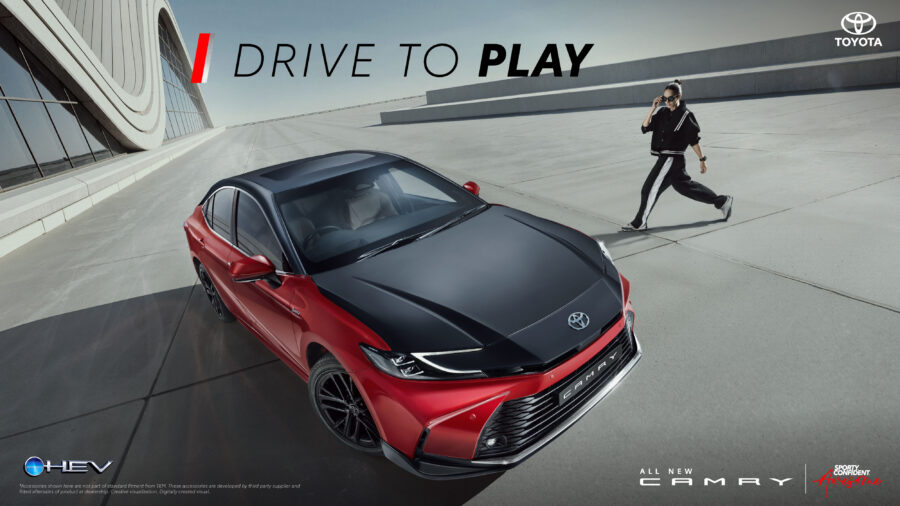
Equipment aimed at regular use
The cabin includes a 12.3-inch multimedia system and a separate 12.3-inch multi-information display. Other listed features include a nine-speaker JBL audio system, wireless Apple CarPlay and Android Auto, wireless charging and a tilt-and-slide moonroof.
Comfort and convenience equipment includes ventilated front seats, memory settings for the driver’s seat, steering wheel and mirrors, and a head-up display. The 360-degree panoramic monitor is particularly relevant in a sedan that stretches close to five metres; it can help the driver judge the car’s surroundings while parking. The source specifications describe the equipment, but don’t establish how it performs in every real-world situation.
Driver support and safety equipment
Toyota lists nine SRS airbags and Toyota Safety Sense 3.0. The driver-support features include a Pre-Collision System, Dynamic Radar Cruise Control, Lane Departure Alert, Lane Tracing Assist and Automatic High Beam.
Additional equipment includes Vehicle Stability Control, Traction Control, tyre-pressure monitoring, ISOFIX child-seat mounts, an electronic parking brake with brake hold, and front and rear parking assistance. These features add to the car’s equipment list, while the driver remains responsible for paying attention and controlling the vehicle.
Where the Camry sits in Toyota’s Indian range
The Camry’s starting price places it above Toyota’s mainstream family models and below its most expensive offering. The listed starting ex-showroom prices are Rs. 12.82 lakh for the Urban Cruiser Hyryder, Rs. 18.70 lakh for the Innova Hycross, Rs. 34.76 lakh for the Fortuner, Rs. 42.92 lakh for the Legender, Rs. 48.69 lakh for the Camry and Rs. 1.20 crore for the Vellfire.
That price ladder makes the Camry’s position clear, but the comparison is about more than cost. The Fortuner and Legender are SUVs; the Vellfire is an MPV. The Camry offers a different combination of sedan ride comfort, hybrid power and rear-seat features. Buyers comparing Toyota cars will need to decide whether those qualities suit their regular journeys better than a taller or larger vehicle.
The Toyota Camry makes the strongest case for drivers who want hybrid efficiency without giving up the refinement and passenger space associated with an executive sedan. Its distinctive value in Toyota’s Indian range lies in that mix: 230 PS system output, 25.49 kmpl certified efficiency, a thoughtfully equipped rear cabin and the option to drive it yourself.