Corvette Skidpad Grip by Generation: C7 Z06 Leads the Tested Field
The C7 Z06 recorded the strongest skidpad result in the available tests. Tire choice, test conditions and sparse early data complicate the generation by generation comparison.

The strongest skidpad result in the available Corvette tests belongs to the front-engine C7 Z06, not the newer mid-engine C8. Car and Driver recorded 1.19 g for a 2015 Z06 with the Z07 package, ahead of every C8 result cited here. That ranking needs a caveat: test equipment, pad size, tires and setup differ across decades, and early Corvette data is thin. Still, the numbers make one point clear: horsepower alone doesn't determine how hard a Corvette can corner.

Skidpad testing measures lateral grip in a steady turn, expressed in g. Tires, suspension and chassis balance shape the result, while engine output has little direct bearing on the measurement. Car and Driver used a 300-foot skidpad in its more recent tests and a 200-foot pad in older ones; results from other publications and courses offer useful context, but aren't perfectly interchangeable. The figures below rank generations by the best results reported in the available tests, not by a single controlled test of every model.
C7: the high point in these tests
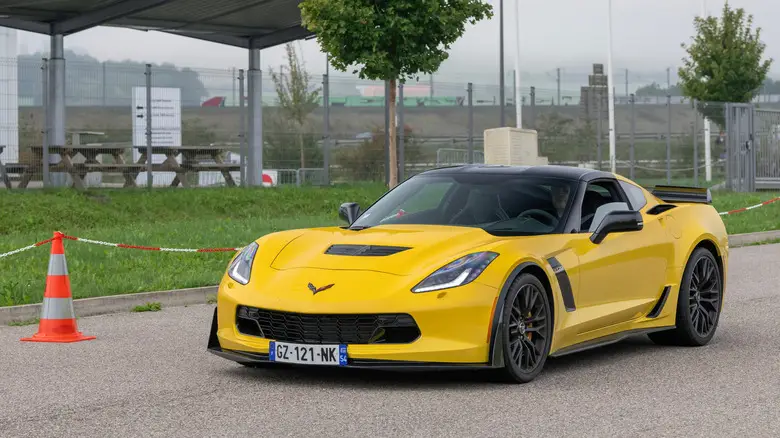
The C7, sold from 2014 through 2019, sets the benchmark. Car and Driver measured 1.19 g from a 2015 Corvette Z06 with the Z07 package, describing a result that was then the highest it had recorded for a production car on that pad. The car combined a supercharged 6.2-liter V8 rated at 650 horsepower with Michelin Pilot Sport Cup 2 ZP tires. It weighed 3,558 pounds.
The Z06's other test figures underline its pace: it stopped from 70 mph in 128 feet, ran the quarter-mile in 11 seconds at 126 mph and reached 60 mph in 2.9 seconds. Those results help explain the car's reputation, but the skidpad figure is the most useful one for this comparison because it focuses on cornering grip.
A 2017 Grand Sport came close, recording 1.18 g despite having 190 fewer horsepower. At 3,452 pounds, it was only slightly lighter than the Z06. Its 70-to-zero stop took 129 feet, its quarter-mile time was 12.2 seconds, and it reached 60 mph in 3.8 seconds. The near-match in grip, despite the gap in power, illustrates how tires and chassis setup can matter more to cornering than engine output.
The 1.19 g result also exceeds every C8 figure cited here. Car and Driver measured 1.13 g for the 1,064-horsepower 2025 ZR1. On the available test record, the C7 Z06 remains the Corvette skidpad leader.
C8: mid-engine layout, lower measured peak

The C8 moved the engine behind the driver, and its Z06 brings a 5.5-liter flat-plane-crank V8 rated at 670 horsepower. With the Z07 package, it rides on Michelin Pilot Sport Cup 2 R tires. Those ingredients suggested a serious challenge to the C7's record, but Car and Driver measured 1.16 g for the Z07-equipped Z06 on its 300-foot pad.
Chevrolet's own figure was 1.22 g. Car and Driver said its result came in well below that estimate and later pointed to tire pressure as a possible factor: the test tires had been set to the door-placard pressure rather than the lower pressure Chevrolet recommended for track use. That difference makes the 1.16 g result harder to treat as a definitive measure of the car's maximum grip. It remains the recorded figure in the test, though.
Other C8 results in Car and Driver's testing also sit below the C7 Z06. A Z06 convertible without the Z07 package reached 1.12 g, while the Stingray recorded 1.03 g. The 2025 ZR1 measured 1.13 g, and the 1,250-horsepower ZR1X reached 1.15 g. That puts the ZR1X just ahead of the Z07 Z06 in this set of results, but 0.04 g short of the C7's 1.19 g.
MotorTrend's figure-eight testing offers a separate view, using 200-foot-diameter turns. It measured 1.16 g for the Z07 Z06 coupe and 1.10 g for the Z06 convertible, close to Car and Driver's respective 1.16 g and 1.12 g readings. The figure-eight also showed a notable gap between trims: the Z07 coupe completed the course in 21.9 seconds, while a $78,090 base Stingray took 24.1 seconds. The Stingray's time matched the Hyundai Ioniq 5 N in MotorTrend's comparison test, another reminder that vehicle category and powertrain don't settle performance on a course by themselves.
C6: the ZR1 outpaced costly rivals
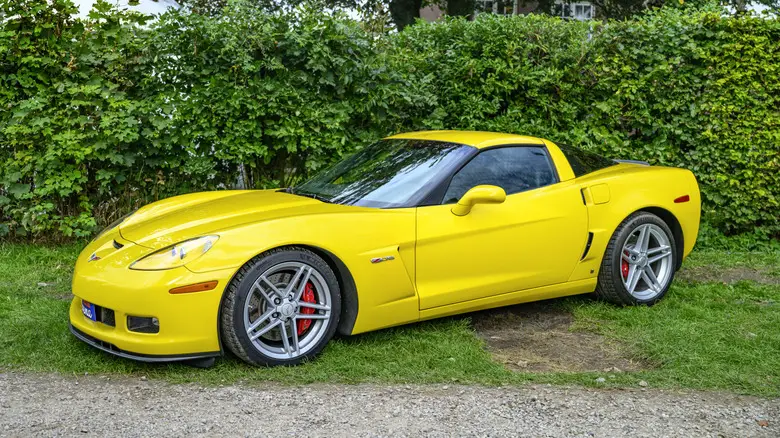
The C6, produced from 2005 to 2013, ranks behind the C7 and C8 peak results in this comparison. Its best cited figure belongs to the supercharged ZR1: Car and Driver measured 1.07 g, exceeding Chevrolet's 1.05 g estimate. The 638-horsepower car used Michelin Pilot Sport PS2 tires and stopped from 70 mph in 142 feet. At the time, Car and Driver called that the shortest stopping distance it had recorded for a production car; the C7 Z06 later bettered it with a 128-foot stop.
The ZR1's grip figure also compared well with far more expensive machinery tested by Car and Driver. The Lamborghini Murciélago LP640 recorded 1.01 g, the Ferrari 599GTB Fiorano 0.98 g, and the Aston Martin DBS 0.97 g. Their listed prices were $325,200, $318,045 and $266,350, respectively; the Corvette ZR1 cost $105,000.
MotorWeek found a similar story on track. At Roebling Road Raceway in Georgia, its test showed the C6 ZR1 lapping faster than any car the program had tested there, including the Ferrari Enzo. The publication called it the “ultimate production Corvette.” These track results measure more than steady-state grip, but they reinforce how much capability the ZR1 brought to its era.
The rest of the C6 range recorded lower numbers in Car and Driver tests: 0.98 g for the 2006 Z06 and 0.95 g for a 2008 Corvette with the Z51 package. A 2010 Grand Sport also reached 0.98 g in a Buttonwillow comparison, although Chevrolet had claimed 1.0 g. The C6 ZR1's 1.07 g peak trails the C7 Z06 by 0.12 g.
C5: strong grip across more than the Z06
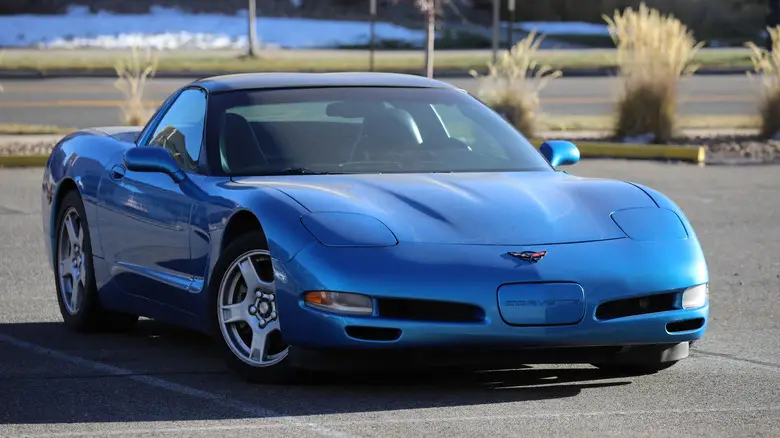
The C5 arrived in 1997 with an LS1 V8, near-even weight distribution and a stiff hydroformed steel frame. Its best Car and Driver result belongs to the 2001 Z06: 0.98 g on a 300-foot pad. The publication described the figure as one of the best it had recorded for a production car.
The 2001 Z06 paired a 385-horsepower LS6 V8 with a 3,126-pound curb weight. Its Goodyear Eagle F1 SC tires measured 265/40 at the front and 295/35 at the rear. MotorTrend recorded 0.99 g for a 2002 Z06, rated at 405 horsepower, on its own skidpad with stability control switched off. Because the tests and conditions differ, that reading is best treated as supporting context rather than a direct comparison with Car and Driver's result.
Non-Z06 C5 models also showed strong grip. Every one Car and Driver had tested by 2004 reached at least 0.90 g. A 2005 Z51 recorded 0.98 g, matching the C5 Z06 result. The 2006 Z06 also measured 0.98 g, despite having 120 more horsepower and weighing 21 pounds more than the 2001 Z06. Both used the same Goodyear tires, a reminder that added power and weight need not change a skidpad result when the tire and chassis combination remains closely related.
Car and Driver's 1997 preview did not include its own skidpad measurement; the 0.92 g figure in its write-up came from elsewhere. Taken together, the available results place the C5 peak 0.09 g behind the C6 ZR1.
C4: early grip, with different pads and tires
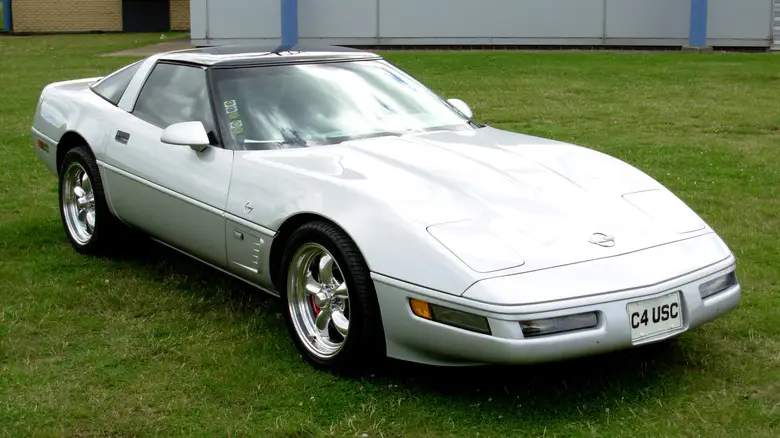
The C4 generation ran from 1984 to 1996. Its early Cross-Fire V8 drew criticism for modest power, yet the 1984 Z51 test shows that engine output doesn't tell the whole handling story. Car and Driver measured 0.90 g on its 200-foot pad, compared with 0.82 g for a Porsche 928 tested as a rival. The Corvette produced 205 horsepower, stopped from 70 mph in 173 feet and used Goodyear Eagle VR50 tires.
Later Car and Driver tests used a 300-foot pad and returned slightly lower figures. A 1988 Corvette, with 40 more horsepower and Goodyear Eagle ZR40 tires, managed 0.87 g. The 330-horsepower 1996 Grand Sport recorded 0.89 g on Goodyear Eagle GS-C tires. These results don't erase the 1984 car's 0.90 g; they do show why comparing generations by their single best figure requires attention to test conditions.
Road & Track measured 0.94 g for the 1990 ZR-1 and described that result as better than any production-built automobile. That figure is higher than the Car and Driver numbers cited for the C4, but it came from another tester. On Car and Driver's 300-foot pad, the generation's listed peak is 0.89 g, 0.09 g below the C5 Z06's 0.98 g.
C3: a long run with a modest peak
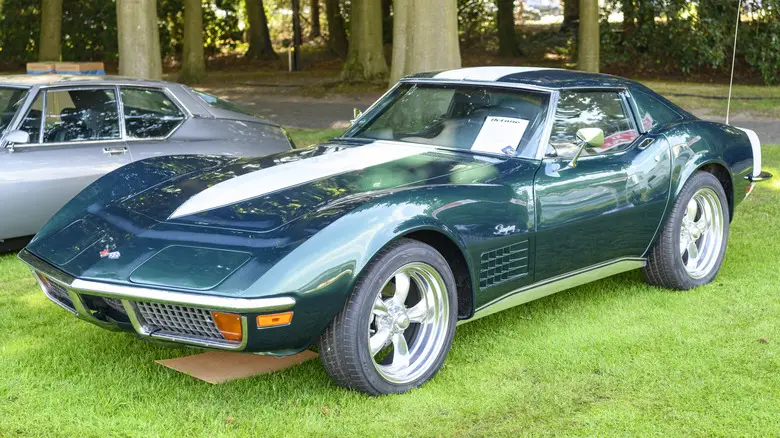
The C3 remained in production for 14 years, from 1968 to 1982, and the available results reflect a changing lineup. In June 1971, Car and Driver tested four versions: a 270-horsepower 350, a 330-horsepower LT1, a 365-horsepower LS5 and a 425-horsepower LS6. The LT1 led the group at 0.80 g and was also the lightest of the four.
Zora Arkus-Duntov was present for that test and gave a range of 0.75 to 0.85 g for production Corvettes, placing the LT1's result in the middle of his estimate. The tested LT1 350 also wore the ZR1 package. For the generation's later years, Car and Driver compared a 1962 roadster with a new 1982 coupe in March 1982. The 1982 car, with 200 horsepower and a 3,300-pound curb weight, reached 0.82 g on a 200-foot pad. The older 360-horsepower roadster recorded 0.77 g.
The 1982 coupe exceeded the 1971 LT1's result by 0.02 g in separate tests despite its much lower horsepower. A year later, the C4 moved the Corvette's measured grip forward again: its cited 1984 result stood 0.08 g above the 1982 C3.
C2: one low figure, limited period data

The C2 ran from 1963 through 1967, but the available skidpad records don't form a complete set. Edmunds tested a 1966 Corvette Sting Ray and a 2015 Toyota Camry XLE on July 7, 2015. The Camry recorded 0.75 g; the Corvette managed 0.70 g. That Sting Ray had 300 gross horsepower, weighed 3,159 pounds and rode on 7.75-15 Firestone Deluxe Champion bias-ply tires.
Car and Driver's 1963 Sting Ray test and its 1967 427 test don't supply skidpad figures. The 1963 road test did report a 14.4-second quarter-mile at 103 mph and praised the independent suspension for improving traction and cornering, but offers no grip measurement to compare. MotorTrend later listed 0.75 g for a 1967 427, tested in 1997, making it the lowest C2 figure in its tally. That same compilation placed the 2015 Z06 with Z07 at 1.17 g, close to Car and Driver's 1.19 g result.
The C2's recorded 0.70 g doesn't capture the whole range's track potential. The 1963 Grand Sport and L88 also feature among the most track-focused Corvettes in the cited history, though no comparable skidpad values are provided here for them.
C1: a figure with a tire caveat
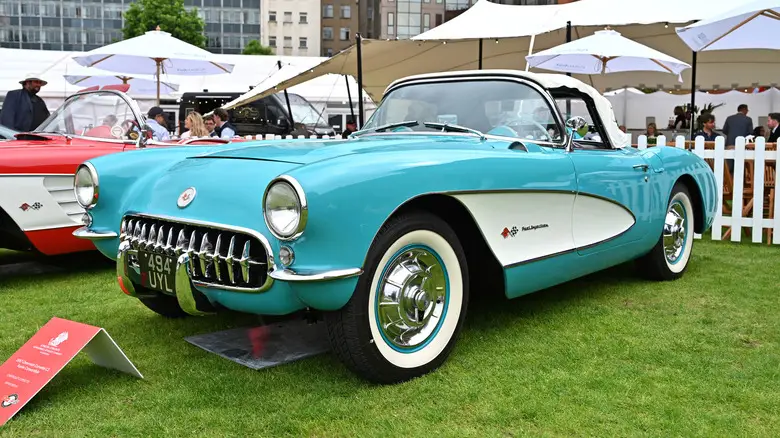
The first Corvette, introduced in 1953, used a 150-horsepower Blue Flame six-cylinder engine and a two-speed Powerglide transmission. Skidpad figures for the 1950s are scarce. MotorTrend's performance history gives a 1954 car an 11.5-second run to 60 mph, while a 1962 four-speed with 360 horsepower reached 60 mph in 5.9 seconds.
The C1's sole cited skidpad result comes from Car and Driver's March 1982 comparison of a 1962 roadster and a 1982 coupe. The roadster recorded 0.77 g on the 200-foot pad, but it used Sears Road Handler GR78-15 tires rather than the 6.70-15 bias-ply tires fitted when it left the factory. The result therefore can't be treated as a clean measure of original specification, and the car may have recorded less grip on its factory tires.
That 1962 Corvette weighed 3,150 pounds, reached 60 mph in 6.1 seconds and stopped from 70 mph in 238 feet. Car and Driver called it “a nasty beast to drive anywhere near its limit.” Its 0.77 g would rank above the C2's 0.70 g figure on paper, but the tire difference makes that ordering uncertain. By the available measurements, the C1 sits last, with the result qualified by its non-original tires.
Across the eight generations, the C7 Z06's 1.19 g remains the standout reading, while the C8's test results show that a newer layout and more power don't guarantee a higher number. The comparison is most useful when read alongside tire specifications, test conditions and each model's broader performance data.