Mercedes-Benz Plans Hands-Free Highway Driving and Point-to-Point Assistance for 2027
Mercedes-Benz plans hands-free highway assistance from spring 2027, with route-based support and hardware already fitted to select vehicles.
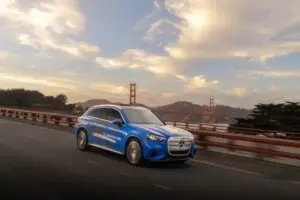
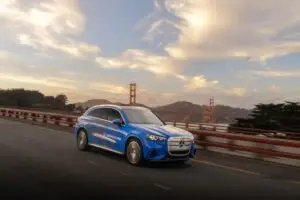
Mercedes-Benz plans to bring two expanded driver assistance features to the U.S. in 2027: hands-free driving on eligible highways and route-based assistance that can help with parts of a journey through urban traffic. The distinction matters for drivers weighing what these systems can do. One is limited to qualifying controlled-access roads; the other is designed to support a navigation route that can include intersections and traffic lights.
Two systems, different driving settings
Hands-Free Highway Assist is scheduled to become available on eligible U.S. roads in spring 2027. Mercedes-Benz says it will let drivers take their hands off the steering wheel on eligible controlled-access highways at speeds up to 85 mph. The company has not given a rollout date for MB.DRIVE ASSIST PRO, its point-to-point system.
MB.DRIVE ASSIST PRO is intended to assist along a navigation route, including in complex urban traffic. Mercedes-Benz says it can help with highway exits, lane changes, merging into the appropriate lane, turns at intersections, and stopping or moving off at traffic lights. That wider set of situations gives the system a different job from highway assistance, though the company’s description presents both as driver support rather than a replacement for the person behind the wheel.
The capabilities make the planned package more relevant to ordinary trips than a feature limited to steady highway cruising. Assistance with intersections and traffic lights reaches into the stop-and-go parts of a route where lane choice and frequent changes in speed can add to the driver’s workload. The company says the systems are designed to reduce routine work behind the wheel; it has not provided performance data or described how often the driver may need to intervene.
Early access and vehicle availability
A limited early access program is due to start in December for selected eligible customers in California. Participants are expected to receive access to both MB.DRIVE ASSIST PRO and Hands-Free Highway Assist. That gives Mercedes-Benz an initial opportunity to put the systems into customer use before broader availability, although the company has not specified how many drivers will take part or how the program’s results will affect the rollout.
Hardware for the features is already installed in certain eligible 2027 vehicles: the CLA Electric, GLE, GLS and S-Class. Mercedes-Benz says more vehicles across its U.S. passenger car range will be equipped to support the feature from model year 2028. Eligibility will depend on the model, and the company says purchase options will vary by model year.
On vehicles with the required hardware, customers will be able to buy the feature digitally, with delivery through an over-the-air update. That approach can make software availability less dependent on a workshop visit, but it also means buyers will need to check whether a particular vehicle has the necessary equipment and which purchase option applies. Mercedes-Benz has not announced prices for the features.
Hardware and software underpin the rollout
The system uses 27 sensing components: 10 cameras, five radar sensors and 12 ultrasonic sensors. Mercedes-Benz says a high-performance computer processes their data at up to 254 TOPS, or tera operations per second. The company also says its MB.OS platform will support regular over-the-air updates with new and improved functions. Those details describe the system’s hardware and software basis, but they don’t establish how the assistance will perform across different roads, weather or traffic conditions.
Mercedes-Benz first introduced the feature in China in 2025. The planned U.S. expansion brings that work to a market where automakers are also extending driver assistance across vehicle types and road settings. The announced U.S. dates and vehicle list provide a clearer near-term picture than the company has given for the full point-to-point rollout: highway assistance is targeted for spring 2027, while the timing for MB.DRIVE ASSIST PRO remains unspecified.
Competition is widening beyond highway cruising
General Motors has described plans to expand its “eyes-off” highway driving technology beyond electric vehicles to gas-powered models, including full-size SUVs and light-duty pickups in coming years. GM previously said it planned to launch the technology on the Cadillac ESCALADE IQ in 2028, then extend it to high-volume vehicle lines. That makes vehicle availability a central part of the competition: a system’s reach depends not only on its capabilities, but also on how many models can support it.
Other automakers are developing assistance with a broader route in mind. Rivian has invited some drivers to an Autonomy Early Access Program intended to test and refine pre-release features, including point-to-point assistance. Its chief executive, RJ Scaringe, has also discussed investment in autonomous driving software and the possibility of future vehicle designs shaped by that technology.
For Mercedes-Benz, the next practical questions are how quickly the route-based system reaches U.S. customers, which models qualify and what the digital purchase options cost. The 2027 plans also set up a comparison with automakers extending assistance into more vehicles. Buyers will need those details, along with experience from the early access program, to judge how much the added support changes a real drive.
Photo courtesy of Mercedes-Benz.