MAHLE Advances Wireless EV Charging With Automated Park & Charge Technology
MAHLE advances wireless EV charging with its Park & Charge pilot, combining autonomous parking and contactless charging at up to 11 kW.The post MAHLE Advances Wireless EV Charging With Automated Pa...
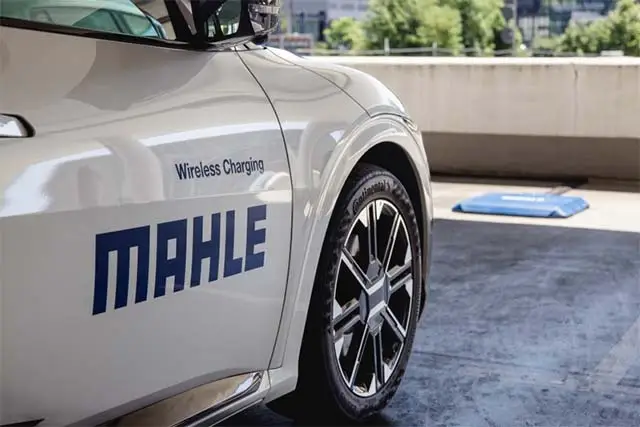
MAHLE is taking wireless electric vehicle charging a step closer to everyday reality with a new Park & Charge pilot that combines autonomous parking with fully automated, contactless charging. The technology could eliminate the need for drivers to search for charging spaces, handle cables, or manually connect their vehicles to charging stations.
The Stuttgart-based automotive supplier is developing the system for automakers, with potential applications ranging from private electric vehicles to commercial fleets operated by rental companies, logistics providers, and delivery services.
The latest development builds on MAHLE’s wireless charging technology and aims to make charging more convenient while creating new opportunities for automated electric vehicle operations.
The MAHLE Park & Charge system uses the vehicle’s existing cameras and artificial intelligence-based algorithms to identify suitable parking spaces equipped with integrated wireless charging infrastructure. No additional vehicle sensors are required.
Once a suitable parking space is identified, the system uses MAHLE’s Differential Inductive Positioning System (DIPS) to guide the vehicle into the correct position above a charging pad installed beneath the parking surface.
After the vehicle is parked, charging begins automatically through inductive power transfer, eliminating the need for physical cables or plugs.
The technology supports wireless charging at up to 11 kW, with an efficiency exceeding 92% under real-world vehicle conditions. This puts MAHLE’s system close to the efficiency levels of conventional wired charging solutions.
DIPS is a key component of the technology, providing the positioning accuracy needed for reliable wireless energy transfer. SAE International recognized the positioning system as a global industry standard two years ago.
“Wireless charging has the potential to make electric mobility much easier in everyday life,” said Dr. Marco Warth, Vice President of Corporate Research and Advanced Engineering at MAHLE.
According to Warth, efficiency, convenience, automation, and seamless integration with existing vehicles and charging infrastructure are essential to the wider adoption of wireless charging.
MAHLE is working with the BMW Group to evaluate its wireless charging technology against real-world vehicle requirements.
The two companies are currently validating the core system in a BMW iX3, assessing how the technology can be integrated into modern electric vehicle platforms.
The collaboration also provides an opportunity to examine vehicle-specific requirements, including the positioning of charging components, electromagnetic shielding, and safety systems.
For MAHLE, successful integration into future vehicle architectures will be an important step toward bringing wireless charging technology closer to commercial production.
To support the development of future wireless charging systems, MAHLE has established a dedicated, high-voltage testing and validation facility in Stuttgart.
Interestingly, the facility was created by converting a former internal combustion engine development test cell into a modern testing center for electric mobility applications.
The new facility allows engineers to evaluate wireless charging under realistic operating conditions while controlling environmental variables.
Testing includes several important safety functions, such as detecting foreign objects in the air gap between the vehicle and the ground-mounted charging pad. Engineers can also measure stray magnetic fields to ensure the system meets safety requirements.
The test bench can replicate different vehicle architectures, including BMW’s Neue Klasse platform. This allows MAHLE to evaluate the integration of vehicle-side charging coils, shielding solutions, and other safety components early in the development process.
While the current Park & Charge pilot supports charging at up to 11 kW, the new testing facility is already designed to handle future wireless charging systems with capacities of up to 30 kW.
This provides room for further development as automakers explore higher-power inductive charging solutions.
Beyond eliminating charging cables, MAHLE’s wireless charging technology already supports bidirectional energy transfer.
This means compatible electric vehicles could eventually do more than simply draw electricity from the grid. They could also return stored energy when needed, supporting applications such as vehicle-to-grid (V2G) technology.
Bidirectional charging could help balance electricity demand, improve the integration of renewable energy sources, and provide additional flexibility for future energy networks.
Combined with automated parking and contactless charging, this capability could make electric vehicles more active participants in tomorrow’s energy infrastructure.
[source: MAHLE]