Total Loss Claims Drag Auto Insurance Satisfaction as Repairable Claims Improve
Total losses cut claim satisfaction, especially when payouts fall short of loan balances; repair times are improving, while insurers still struggle to coordinate customer service.
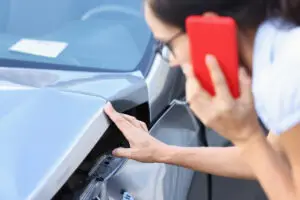
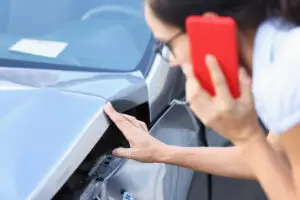
Auto insurers face a widening satisfaction gap between claims that can be repaired and those that end with a vehicle declared a total loss. The 2026 U.S. Auto Claims Satisfaction Study puts the penalty for a total loss determination at 12 points, while satisfaction rises by four points when damage is repairable. The distinction matters as total losses account for a growing share of claims and the financial consequences can extend beyond the insurer’s settlement.
Total losses made up 26% of auto insurance claims in 2026, compared with 16% four years earlier. Satisfaction for total loss claims has now fallen for three straight years, down 46 points since 2023. The study’s aggregate score held at 700 out of 1,000, unchanged from last year. That stable topline masks a difficult experience for customers whose vehicles cannot be returned to the road.
Loan balances can deepen the loss
The most severe satisfaction result appears when a payout fails to cover a customer’s remaining vehicle loan. In that situation, the score is 490, the study says. Among customers with loans whose vehicles were declared total losses, one in four received less from the insurer than they still owed.
That gap can leave a customer without a vehicle and still responsible for a loan balance. The settlement may reflect the vehicle’s value, while the outstanding debt depends on the customer’s financing and how much has already been repaid. Those figures don’t necessarily move together. As a result, a claim can be handled promptly and still leave the customer facing a difficult financial outcome.
The study identifies several pressures behind the larger share of total loss claims: repair costs have risen, more drivers are keeping vehicles longer, and higher deductibles mean some smaller repairs never enter the claims process. These factors can change the path a damaged vehicle takes after a collision. A repair bill that once supported a fix may now make a total loss determination more likely, while a high deductible can make filing a smaller claim less appealing to the owner.
For drivers, repairability shapes more than the final settlement. A repairable vehicle can return to service, but the owner may need alternate transport while work is underway. A total loss involves valuation and settlement instead, and an outstanding loan adds another consideration. Policy choices such as rental coverage and deductible levels can also affect what support is available during the claim.
Repair times are shorter, but coordination remains uneven
There is better news for repairable claims: repair cycle times have improved. The study reports an average of 15.3 days through the first quarter, 10 days shorter than in the first quarter of 2024. That can reduce the time customers spend without their vehicles, though it doesn’t remove the need to arrange transport or explain delays and decisions along the way.
Enterprise Mobility reported that the average length of rental for collision related rentals was 15.1 days in the second quarter of 2026, the same as in the second quarter of 2025. The comparison offers a useful ownership measure alongside repair cycle times: faster repair work doesn’t automatically mean rental periods have shortened from one year to the next.
How well insurers connect their service channels is another strong marker of customer experience. Satisfaction reaches 804 when customers strongly agree that the insurer provided a coordinated experience across channels. It falls to 390 when customers disagree. Confusing explanations, needing to contact the insurer through several channels, and digital tools that don’t work as expected are among the reasons customers report dissatisfaction.
Insurers delivered that coordinated experience in 54% of cases, one of the study’s weakest performance measures. That leaves a substantial share of customers navigating disconnected interactions while trying to resolve a claim. The result suggests that improving repair speed alone won’t address every source of frustration: customers also need clear explanations and consistent information when they switch between online tools, phone calls and other service channels.
Amica led the study’s customer satisfaction rankings with 775 points, followed by Nationwide at 743 and Automobile Club of Southern California (AAA) at 740. The study assesses trust, settlement fairness, staff interactions, time to settle, communication, ease of starting and resolving a claim, and digital channels.
Its findings draw on responses from 8,261 auto insurance customers who had settled a claim within the nine months before taking part. The survey ran from September 2025 through August 2026. For insurers, the results point to two connected challenges: keep repairable claims moving and make the settlement process easier to understand when a vehicle is written off. For drivers comparing coverage, rental benefits and deductibles are practical details to review before a claim, since those choices can shape the experience when a vehicle is out of service or cannot be repaired.